Medical Billing Codes Explained: CPT, ICD, and HCPCS Codes for Patients
Every medical bill is essentially a series of codes — standardized numbers that tell insurance companies exactly what services were provided and what diagnoses justified those services. Most patients never look at these codes, which is why billing errors often go undetected. Understanding the basic medical billing code system gives you the knowledge to spot errors, understand your charges, and fight incorrect bills effectively.
Disclaimer: This content is for educational purposes only. Medical coding is complex and specific situations may require professional guidance.
The Three Main Medical Billing Code Systems
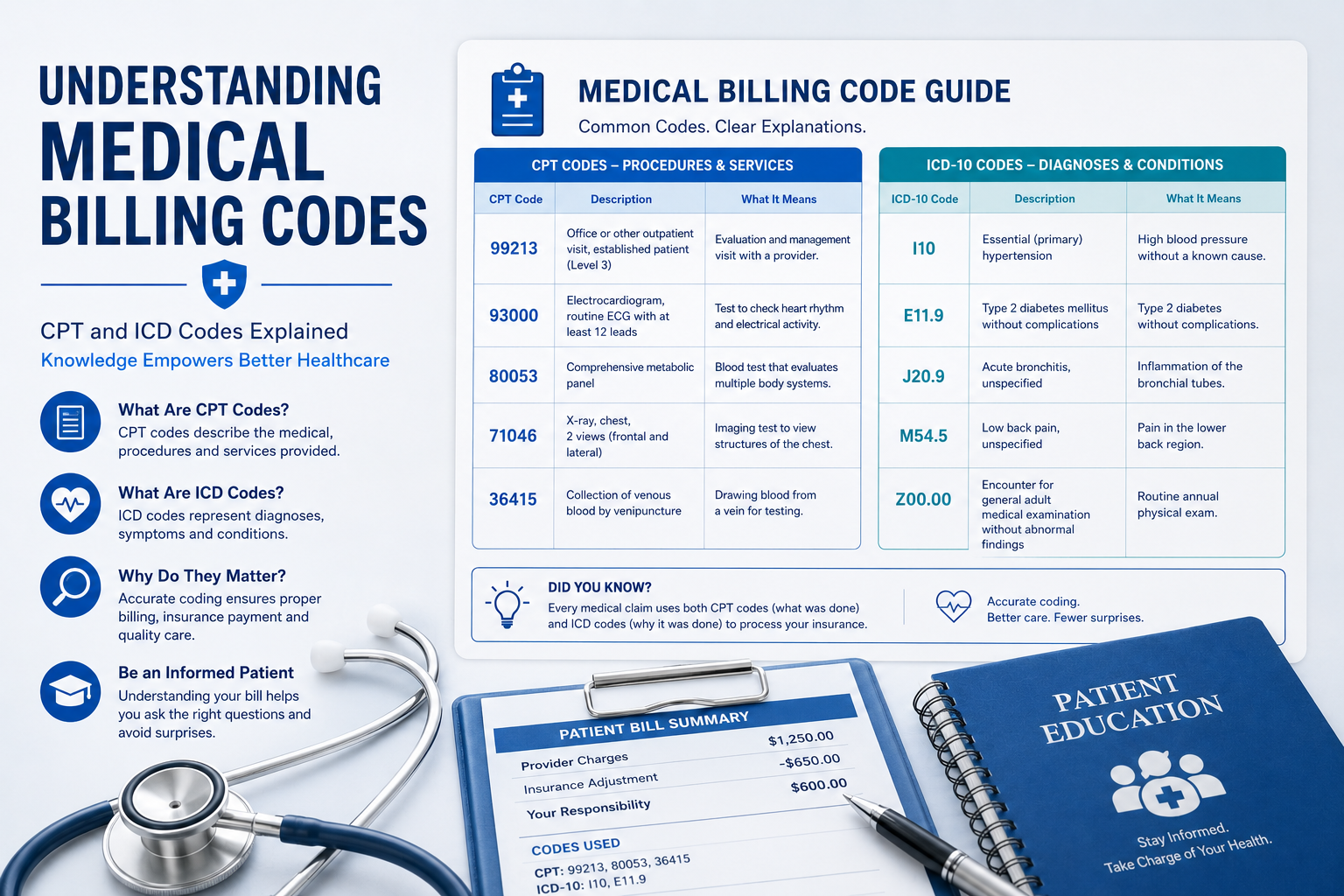
Medical billing uses three primary code sets. CPT codes describe medical procedures and services. ICD codes describe diagnoses and medical conditions. HCPCS codes cover medical equipment, supplies, and services not covered by CPT codes. All three appear on medical bills and insurance claims, and errors in any of them can result in denied claims or incorrect charges.
CPT Codes — Procedure Codes
Current Procedural Terminology codes are 5-digit numbers that describe every medical procedure or service a provider can perform. Each CPT code has a specific dollar value that insurance companies use to calculate payment. Common CPT codes patients encounter include 99213 and 99214 for office visits of different complexity levels, 93000 for an electrocardiogram, 80053 for a comprehensive metabolic panel blood test, and 71046 for a chest X-ray.
The most common CPT code error patients experience is upcoding — where a simpler service is billed under a more complex and expensive CPT code. For example, a brief 10-minute follow-up visit billed as a comprehensive new patient evaluation. Read our guide on How to Read Your Medical Bill for how to identify upcoding in your bills.
ICD Codes — Diagnosis Codes
International Classification of Diseases codes describe the medical diagnosis or condition that justified the services provided. ICD-10 codes are alphanumeric and very specific — for example J06.9 is an acute upper respiratory infection, M54.5 is low back pain, and E11.9 is type 2 diabetes without complications. Insurance companies use ICD codes to determine whether services were medically necessary for the stated diagnosis. If the ICD code does not logically match the procedure codes, claims get denied.
HCPCS Codes — Supply and Equipment Codes
Healthcare Common Procedure Coding System codes cover items and services not described by CPT codes. This includes durable medical equipment like wheelchairs and CPAP machines, ambulance services, prosthetics, orthotics, and drugs administered in a clinical setting. HCPCS codes start with a letter followed by four numbers — for example A9270 covers non-covered items or services.
How to Use Code Knowledge to Protect Yourself
You do not need to memorize medical codes — you need to know how to look them up. When you receive a bill with codes you do not recognize, search the CPT code on the American Medical Association website or simply Google the code number. Verify the service description matches what you actually received. Compare your bill codes against your Explanation of Benefits to ensure the same codes appear on both documents.
Common Coding Errors That Cost Patients Money
Unbundling — billing separately for procedures that should be billed together as one code at a lower price. Duplicate billing — the same service billed twice under different or identical codes. Upcoding — billing a more complex service code than was actually performed. Incorrect modifier codes — modifiers that change how codes are interpreted and can significantly change the payment amount.
What to Do When You Find a Coding Error
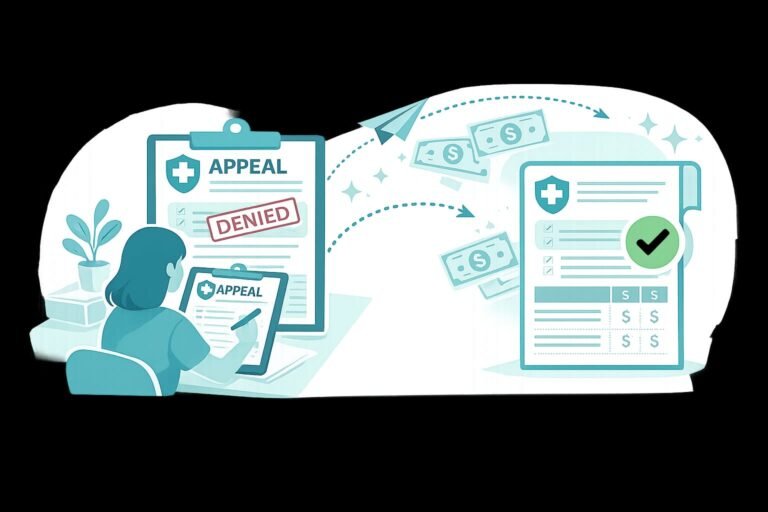
If you identify a code that does not match the service you received, contact your provider’s billing department first. Politely explain the discrepancy and ask them to verify the code against your medical records. If the provider confirms an error, request a corrected claim submission to your insurance. If they dispute your finding, contact your insurance company and file a formal complaint. Read our guide on How to Appeal a Medical Bill Denial if the error led to a claim denial.
Conclusion
Medical billing codes are not mysterious — they are standardized descriptions of medical services and diagnoses that you can look up and verify. Taking a few minutes to understand the codes on your bill can reveal errors that save you hundreds or thousands of dollars. Combined with reading your Explanation of Benefits and knowing How to Negotiate Your Medical Bill, understanding billing codes gives you a complete toolkit for protecting yourself from medical billing problems.