How to Negotiate Medical Bills After Surgery — Save Up to 80%
Have you ever opened a hospital bill after surgery and felt your heart sink? You are not alone. Every single day, millions of Americans receive medical bills they cannot afford — bills filled with errors, inflated charges and codes that make no sense. Here is something hospitals do not advertise: you can negotiate almost every medical bill. And most people who do save between 40% and 80% off their original bill. This complete guide gives you the exact step-by-step process, word-for-word scripts and insider strategies that the FightMedicalBill Team has spent years researching — completely free.
What Most People Do Not Know About Medical Bills
Before we dive into the steps, you need to understand one critical fact: Hospitals have two completely different price lists. The first is called the chargemaster rate — this is the inflated price printed on your bill. It is the price hospitals hope to charge. The second is the negotiated rate — this is what insurance companies actually pay. It is typically 30% to 60% lower than the chargemaster rate. Here is the part hospitals never tell uninsured or underinsured patients: you can negotiate to the same rates insurance companies pay. You just need to know how to ask. According to the Consumer Financial Protection Bureau (CFPB), medical debt is the leading cause of personal bankruptcy in the United States. Over 100 million Americans carry some form of medical debt — yet the majority never attempt to negotiate their bills. That ends today.
Step 1 — Do Not Pay Anything Yet
This is the single most important rule in medical bill negotiation. Never pay a medical bill the moment it arrives. Most people feel pressured to pay immediately. Hospitals count on this. But paying immediately means you lose all negotiating power. Instead, do this: • Read the bill carefully • Note every charge listed • Check the due date — you almost always have 30 to 90 days minimum • Write down the billing department phone number You have time. Use it wisely.
Step 2 — Request Your Complete Itemised Bill
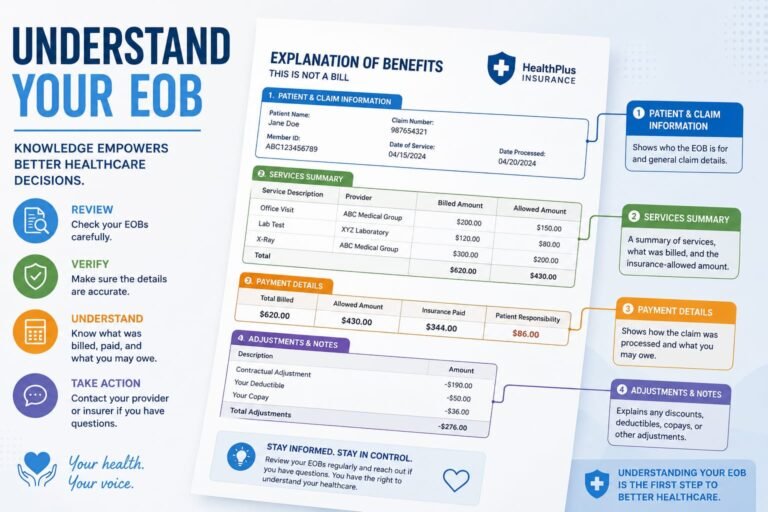
This single step has helped our readers find thousands of dollars in errors. An itemised medical bill lists every single charge individually — every medication, every procedure, every supply used during your surgery or hospital stay. Most hospitals send you a summary bill first. This is a simplified version that hides individual charges behind broad categories. You need the itemised version.
How to Request Your Itemised Bill
Call the hospital billing department and say exactly this: “Hello, I am calling about my account number [your account number]. I would like to request a complete itemised statement of all charges related to my visit on [date of surgery]. I would like this sent to me in writing by mail or email. Can you arrange that for me please?” Under the Health Insurance Portability and Accountability Act (HIPAA), you have a legal right to receive this document. Hospitals are required to provide it. Allow 5 to 10 business days for the itemised bill to arrive.
Step 3 — Check Every Single Charge for Errors
Here is a fact that should shock you: Studies show that up to 80% of medical bills contain at least one error. According to research published by Medical Billing Advocates of America, the most common billing errors include: • Duplicate charges — the same service billed twice • Upcoding — a less expensive procedure billed as a more expensive one • Unbundling — procedures that should be billed together split into separate charges • Services never rendered — charges for treatments you never received • Wrong diagnosis codes — incorrect ICD codes that change what is billed • Incorrect patient information — wrong insurance details causing claim denials
How to Check Your Bill
Go through every line item and ask yourself: 1. Do I recognise this charge? 2. Was this service actually performed on me? 3. Does the quantity listed make sense? 4. Is the same service listed more than once? If you do not understand a charge — circle it and ask about it. You are under no obligation to pay for services you cannot verify were provided.
Step 4 — Research the Fair Price for Your Procedures
Before you call to negotiate, you need to know what a fair price actually is. These free tools show you what hospitals typically accept for each procedure in your area: • Healthcare Bluebook (healthcarebluebook.com) — shows fair market prices by procedure and zip code • FAIR Health Consumer (fairhealthconsumer.org) — shows typical costs by procedure code • ClearHealthCosts (clearhealthcosts.com) — shows what others have actually paid Look up every major procedure on your bill using its CPT code (the 5-digit code listed next to each charge). Write down the fair market price for each procedure. This becomes your negotiating target.
Step 5 — Call the Hospital Billing Department
This is where most people feel nervous. But with the right script, this call is straightforward and often surprisingly effective.
Before You Call — Prepare These
• Your account number • Your itemised bill • The list of any errors you found • The fair market prices you researched • A pen and paper to take notes • The date, time and name of every person you speak with
When to Call
The best time to call a hospital billing department is: Tuesday, Wednesday or Thursday between 10am and 2pm Eastern Time. Avoid Mondays (staff are catching up from the weekend) and Fridays (people are winding down).
The Opening Script
When someone answers, say: “Hello, my name is [your name] and I am calling about account number [number]. I recently received my bill following my surgery on [date] and I have some questions and concerns I would like to discuss. Could you please connect me with someone who has authority to review and adjust account balances?”
Step 6 — Negotiate the Balance
Once you are speaking with the right person, work through these strategies in order:
Strategy A — Point Out Errors First
“I have reviewed my itemised bill carefully and I have identified what appear to be some errors. On line [X] I see a charge for [service] but I do not believe this service was provided. I would like these reviewed and corrected.”
Strategy B — Reference Fair Market Prices
“I have researched the typical reimbursement rate for [procedure name] with CPT code [number] in my area. According to Healthcare Bluebook, the fair market price is [amount]. My bill shows [higher amount]. I would like to request that my balance be adjusted to reflect the fair market rate.”
Strategy C — Request the Self-Pay Discount
Many hospitals offer a self-pay discount of 20% to 40% simply for paying out of pocket. Most people never ask for it. “I understand that hospitals often offer a self-pay or cash-pay discount for patients paying directly. Could you please apply the self-pay discount to my account?”
Strategy D — Reference Your Financial Situation
“I want to pay this bill but I am genuinely struggling financially after my surgery. I am not in a position to pay the current amount. What options are available to help me reduce this balance to something I can actually manage?”
Step 7 — Ask About Charity Care and Financial Assistance
This is the step most patients never reach — and it is often the most powerful of all. Every non-profit hospital in the United States is legally required to offer charity care to patients who cannot afford their bills. This is a condition of their tax-exempt status under IRS rules. Charity care can reduce your bill by 50% to 100% depending on your income level. To apply, say: “I would like to apply for your hospital’s financial assistance or charity care program. Could you please send me the application and tell me what documentation I need to provide?” Typically you will need to provide: • Proof of income (recent pay stubs or tax return) • Bank statements • Proof of expenses (rent, utilities) • Completed hospital financial assistance application
Income Thresholds
Most hospital charity care programs use the Federal Poverty Level (FPL) as their guide: • Under 200% FPL — 100% bill forgiveness • 200–300% FPL — 75–80% reduction • 300–400% FPL — 50% reduction • Over 400% FPL — Sliding scale discount Even if you think you earn too much to qualify — apply anyway. Many hospitals have more generous thresholds than the standard guidelines.
Step 8 — Negotiate a Zero-Interest Payment Plan
If you cannot pay the full negotiated amount, request a payment plan with zero interest. “I am prepared to commit to a monthly payment plan. However, I want to confirm that there will be no interest charged on this balance. Can you confirm that in writing before I agree to anything?” Most hospital billing departments will agree to zero-interest payment plans, especially if you have shown good faith by engaging with them directly. Always get the payment plan agreement in writing before making your first payment.
Step 9 — Get Everything in Writing
Whatever you agree to — always confirm it in writing before paying a single dollar. After your call, send a follow-up email or letter: “Dear [name of person you spoke with], thank you for our conversation on [date]. I am writing to confirm the agreement we reached: [state the exact terms]. Please confirm these terms in writing so I can proceed with payment.” This protects you completely. Without written confirmation, hospitals have been known to send the original balance to collections even after verbal agreements.
Real Case Study — How One Family Saved $18,400
When the Johnson family received a $26,000 bill following emergency abdominal surgery, they followed every step in this guide. Here is what they found and what they did: • Found 2 duplicate charges totalling $1,200 — removed immediately • Found 1 procedure listed that was not performed — $3,800 removed • Applied fair market pricing to 3 procedures — $4,600 reduction • Received self-pay discount of 20% on remaining balance — $3,280 reduction • Applied for charity care — qualified for 50% reduction — $5,520 reduction Original bill: $26,000Final amount paid: $7,600Total saved: $18,400 This is not unusual. It is what happens when patients know their rights and use them.
What to Do if the Hospital Refuses to Negotiate
Sometimes billing departments say no. When this happens: 1. Ask to speak with a supervisor. Front-line staff often have limited authority. Supervisors and financial counsellors typically have much more flexibility. 2. Contact the hospital Patient Advocate. Every hospital has a patient advocate whose job is to help patients navigate billing issues. 3. File a complaint with your State Insurance Commissioner if you believe you have been billed incorrectly or unfairly. 4. Hire a medical billing advocate. Professional advocates work on a contingency basis — typically 25% to 35% of whatever they save you. 5. Consult a non-profit credit counselling agency. Organisations affiliated with the National Foundation for Credit Counseling (NFCC) offer free or low-cost advice on dealing with medical debt.
Quick Reference — Negotiation Scripts
Requesting an Itemised Bill
“I would like to request a complete itemised statement of all charges for account number [X]. I have a legal right to this document under HIPAA. Please send it to [your email/address].”
Opening a Negotiation Call
“I am calling about account number [X]. I have reviewed my itemised bill and would like to discuss some concerns. Could I please speak with someone who has authority to review and adjust balances?”
Requesting Charity Care
“I would like to apply for financial assistance or charity care. Could you please send me the application form and list of required documents?”
Confirming a Payment Plan
“I want to confirm our agreement in writing before making any payment. Could you please email me confirmation that my balance has been reduced to [amount] and that my payment plan of [amount] per month carries zero interest?”