Surprise Medical Bills and the No Surprises Act: Your Complete Rights Guide for 2026
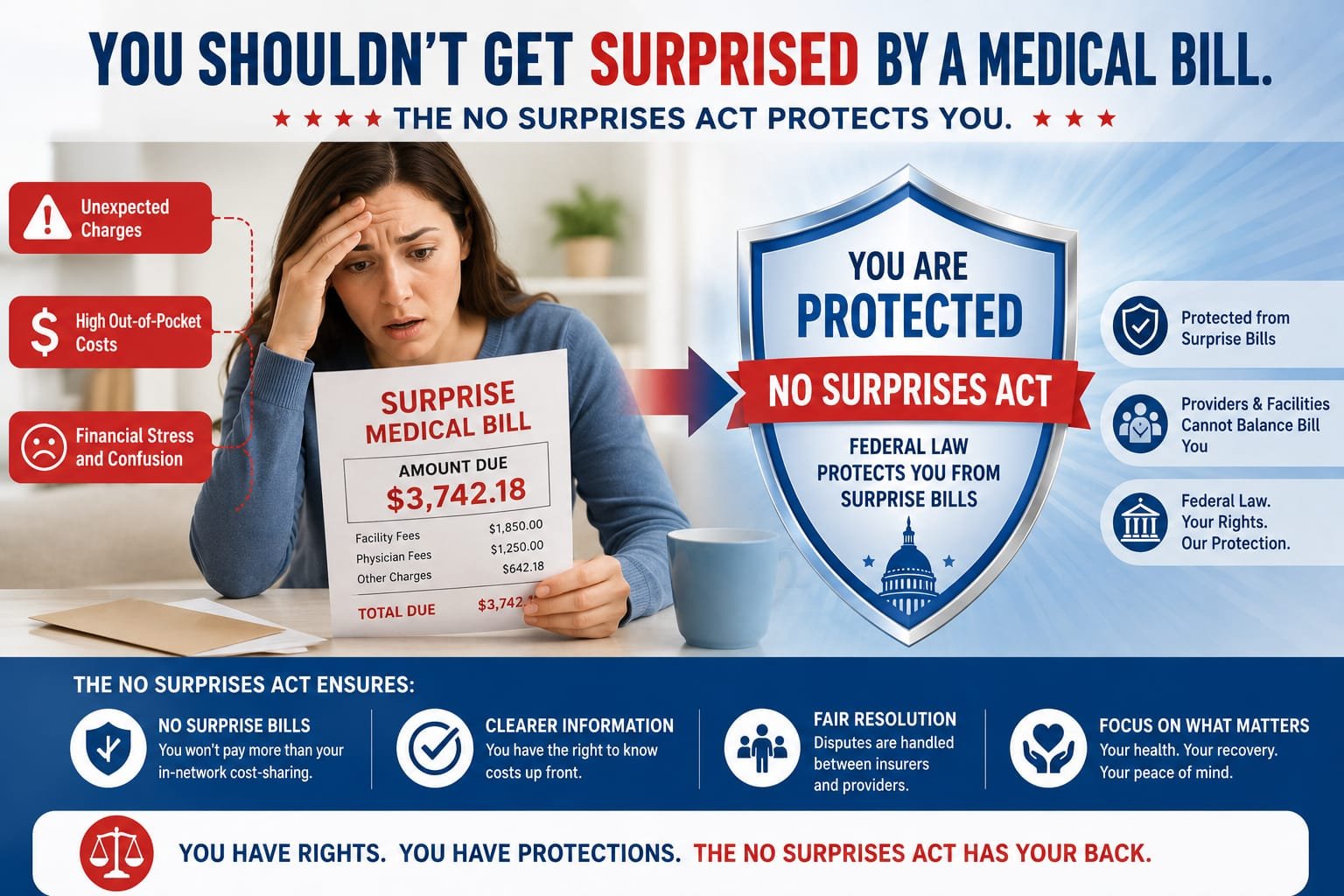
Surprise medical bills — also called balance billing — have been one of the most financially devastating problems in American healthcare. Patients undergoing emergency procedures, surgeries, or even routine in-network care would receive enormous bills from out-of-network providers they never chose and often did not even know were involved in their care. The No Surprises Act, which took effect January 1, 2022, fundamentally changed the legal landscape for these bills. This comprehensive guide explains your rights under the law, what is and is not covered, and exactly what to do when you receive a potential surprise bill.
Disclaimer: This content is for educational purposes only and does not constitute legal advice. Laws and their interpretation continue to evolve. Consult a qualified professional for advice specific to your situation.
What is a Surprise Medical Bill and Why Did They Exist?
A surprise medical bill occurs when a patient receives care from a provider who is out of their insurance network — often without the patient’s knowledge or meaningful choice — and then receives a bill for the difference between the provider’s full charge and what insurance paid. This practice, called balance billing, could result in bills of thousands or even tens of thousands of dollars for services the patient received while at an in-network facility.
The most common scenarios for surprise billing include emergency care at out-of-network facilities or with out-of-network emergency physicians, anesthesiology services during an in-network surgery when the anesthesiologist is out-of-network, radiology or pathology interpretations by out-of-network specialists, and consulting physician services during a hospitalization. In all these cases, patients typically had no opportunity to verify or choose the provider’s network status.
What the No Surprises Act Covers — Your Core Protections
The No Surprises Act establishes several powerful protections that apply to most privately insured patients in the United States.
Emergency services protection: For emergency services, you cannot be billed more than in-network cost-sharing amounts — your deductible, copay, and coinsurance — regardless of whether the emergency facility or emergency physicians are in your network. This is one of the most significant provisions because emergencies by definition do not allow for provider selection.
Non-emergency services at in-network facilities: When you receive non-emergency care at an in-network hospital or facility, you cannot be billed at out-of-network rates by providers at that facility unless you received written notice of the out-of-network status and provided explicit written consent to out-of-network billing at least 72 hours before the scheduled service. The consent requirement has strict limitations — it cannot be required for ancillary services like anesthesiology, radiology, pathology, neonatology, or assistant surgeons.
Air ambulance protection: Air ambulance services from out-of-network providers are covered under the No Surprises Act with the same in-network cost-sharing protections as emergency care. This addressed a significant source of surprise billing that had received substantial public attention.
Good faith cost estimates: Healthcare providers are required to provide good faith cost estimates before scheduled services for uninsured or self-pay patients. Insured patients can also request these estimates to understand their expected costs.
What the No Surprises Act Does NOT Cover
Understanding the law’s limitations is as important as understanding its protections. The No Surprises Act does not cover ground ambulance services, which remain a significant source of surprise billing that Congress has been working to address separately. It does not protect patients who knowingly and voluntarily chose out-of-network care with proper written notice and consent. It generally does not apply to Medicare, Medicaid, or TRICARE, which have their own separate balance billing protections. Some self-funded employer plans administered under ERISA may have different rules.
International services and services received outside the United States are also not covered. Services at facilities that are entirely out-of-network for non-emergency care where you had the ability to choose an in-network facility are generally not protected. Understanding these limitations helps you know when you are protected and when you need to be proactive about network verification.
How to Verify Whether the No Surprises Act Applies to Your Bill
When you receive a large out-of-network bill, systematically evaluate whether it falls under No Surprises Act protection. Was this an emergency service? Was the care received at an in-network facility even though the specific provider was out-of-network? Was this an air ambulance service? Did you receive and sign a notice and consent form for out-of-network billing? Reviewing your Explanation of Benefits can help you understand how the claim was processed and whether it was treated as in-network or out-of-network.
If any of the first three questions answer yes and you did not properly consent to out-of-network billing, the No Surprises Act likely protects you and you should not pay the balance billing amount.
Steps to Take When You Receive a Potential Surprise Bill
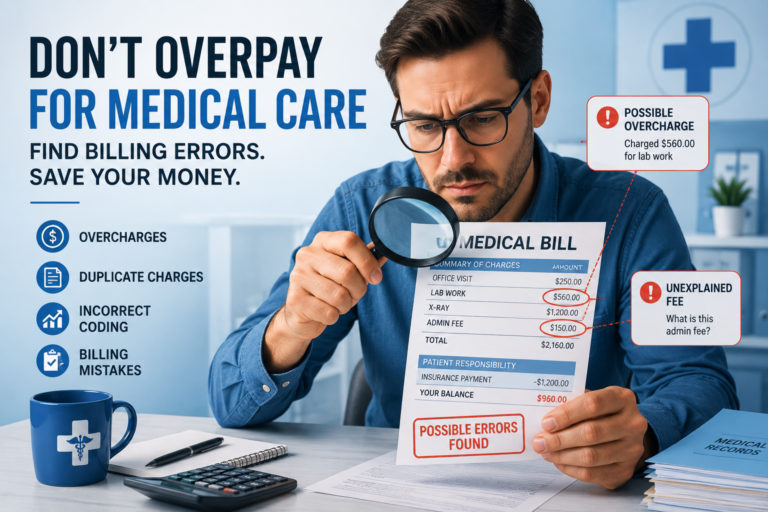
Step 1 — Do not pay immediately. Never pay a large unexpected bill before investigating it thoroughly. Request an itemized bill and review it carefully against your EOB. Read our guide on How to Read Your Medical Bill and Spot Errors for a systematic review process.
Step 2 — Contact your insurance company. Report the surprise bill to your insurer and ask them to evaluate whether it violates the No Surprises Act. Insurers have direct obligations under the law to work with providers on appropriate reimbursement for covered surprise billing situations.
Step 3 — Contact the provider. Inform the billing department that you believe the bill violates the No Surprises Act. Reference the specific provision that applies to your situation. Many providers will immediately adjust the bill to in-network rates when informed of their legal obligations.
Step 4 — File a complaint if the provider does not comply. File a complaint with the federal government through the No Surprises Help Desk at 1-800-985-3059 or online at cms.gov/nosurprises. Also contact your state insurance commissioner, as many states have additional surprise billing protections that go beyond federal law.
State Surprise Billing Protections — Additional Rights
Many states had surprise billing protections in place before the federal No Surprises Act, and some state protections are stronger than the federal law. States including California, New York, Texas, and Florida have comprehensive surprise billing laws that may provide additional protections beyond federal requirements. Check with your state insurance commissioner’s office to understand your state’s specific protections.
Negotiating Surprise Bills Not Covered by Law
For surprise bills that fall outside No Surprises Act protection — such as ground ambulance bills or situations where you had genuine choice of provider — negotiation is still a powerful tool. Read our comprehensive guide on How to Negotiate Your Medical Bill Down for scripts and strategies that work. Also explore free resources for medical bill help including hospital charity care programs that may apply even to surprise bills.
Frequently Asked Questions About Surprise Medical Bills
Does the No Surprises Act apply to my employer’s health insurance? The Act applies to most employer-sponsored health plans, though self-funded plans administered under ERISA may have some different rules. Check with your HR department or plan administrator.
What if a provider violates the No Surprises Act? File a complaint with the federal government and your state insurance commissioner. Providers who violate the Act face significant financial penalties.
Can I sue a provider for violating the No Surprises Act? The Act provides for government enforcement and penalties rather than a private right of action for patients. However, state laws may provide additional remedies.
What is the No Surprises Act Help Desk? A federal resource for patients to report potential violations and get help understanding their rights. Available at 1-800-985-3059 or cms.gov/nosurprises.
Conclusion
The No Surprises Act represents the most significant federal protection against surprise medical billing in American history. Understanding what it covers, what it does not cover, and how to enforce your rights under it can save you from enormous unexpected medical expenses. Never pay a surprise bill without first investigating whether it violates federal or state law. Use the complaint process aggressively when providers refuse to comply. And combine your legal protections with the practical strategies in our guides on How to Read Your Medical Bill, How to Appeal a Medical Bill Denial, and How to Negotiate Your Medical Bill Down for comprehensive protection against medical billing problems.