What is an Explanation of Benefits (EOB)? Complete Patient Guide
After any medical visit, you will receive a document from your insurance company called an Explanation of Benefits — commonly known as an EOB. Most people glance at it and set it aside, assuming it is just an informational notice. In reality, your EOB is one of the most important documents you receive from your insurer and reading it carefully can save you significant money. This guide explains exactly what an EOB is, how to read every section, and what to do when something does not look right.
Disclaimer: This content is for educational purposes only and does not constitute legal or financial advice.
What is an Explanation of Benefits?
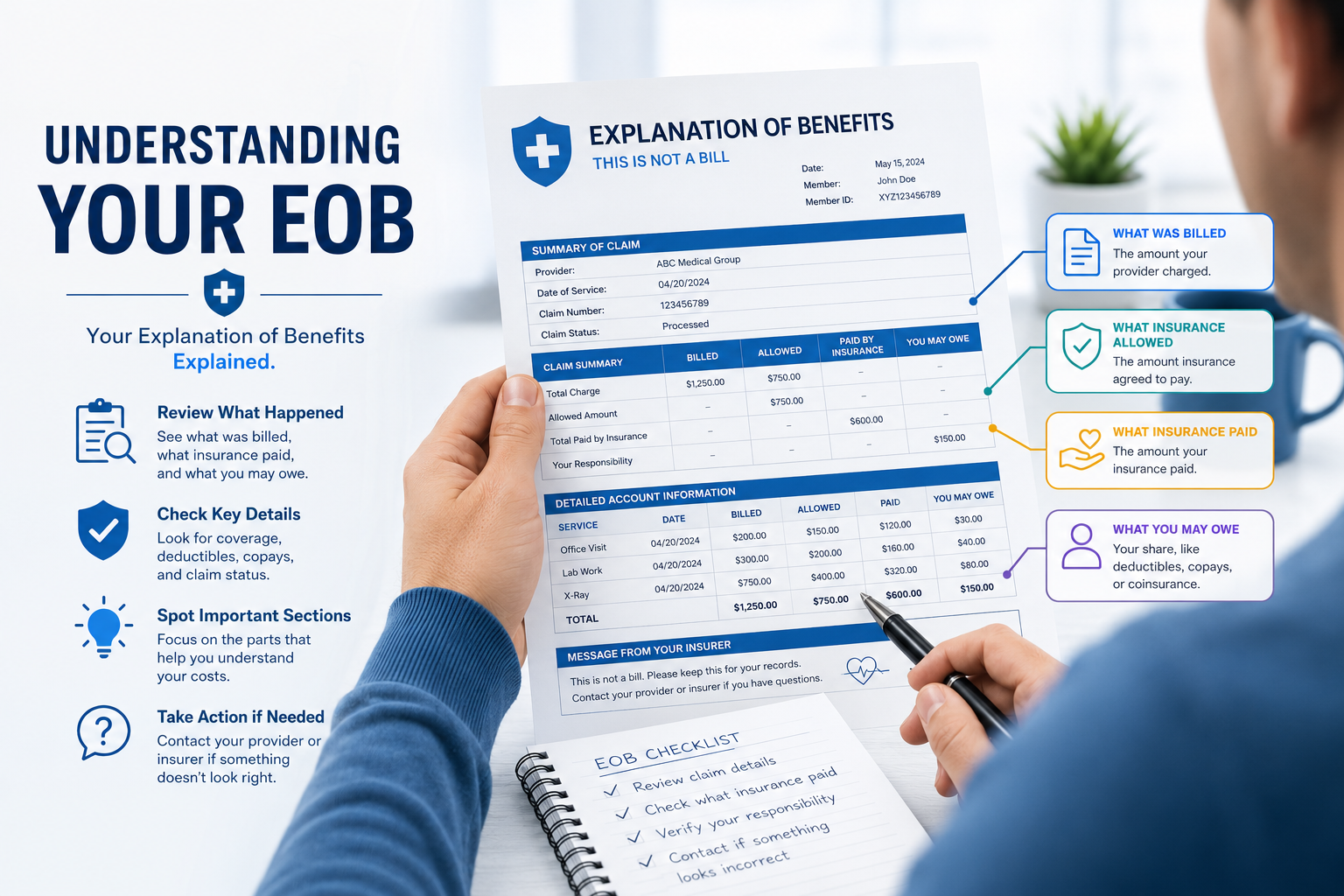
An Explanation of Benefits is a statement from your health insurance company explaining how a medical claim was processed. It is NOT a bill — it is a summary of what your provider billed, what your insurance allowed, what your insurance paid, and what you may owe. The EOB arrives after your insurance company processes a claim submitted by your healthcare provider. Understanding the difference between an EOB and an actual bill is the first step to avoiding overpayment.
Key Sections of an EOB Explained
Service description: Lists each medical service or procedure billed using CPT codes and descriptions. Verify each service matches what you actually received. Read our guide on How to Read Your Medical Bill for help understanding billing codes.
Amount billed: What your provider charged before any insurance adjustments. This is often much higher than what insurance actually pays due to negotiated rates.
Allowed amount: The maximum amount your insurance company has agreed to pay for a service under your plan contract. This is always lower than the billed amount for in-network providers.
Plan discount: The difference between what was billed and the allowed amount. This is money you save simply by using an in-network provider.
What insurance paid: The actual amount your insurance company paid to the provider.
Your responsibility: What you may owe after insurance payment — including deductible, copay, and coinsurance amounts.
Why You Should Always Compare EOB to Your Medical Bill
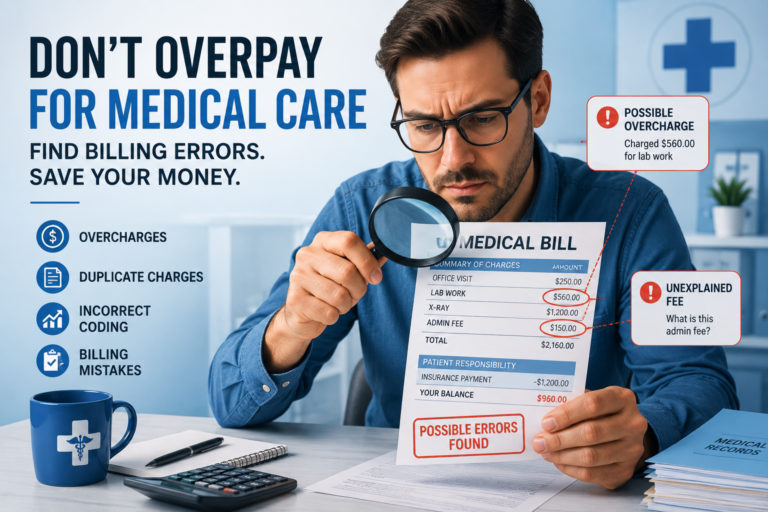
One of the most important things you can do when you receive a medical bill is compare it against your EOB. The amount your provider bills you should match the “your responsibility” section of your EOB. If your provider bills more than what your EOB shows as your responsibility, you may be being overcharged. This comparison catches a significant number of billing errors that cost patients money unnecessarily.
Common EOB Red Flags to Watch For
Services you did not receive appearing on the EOB. Dates of service that do not match your actual appointments. A claim processed as out-of-network when you used an in-network provider. Your deductible or out-of-pocket maximum calculations appearing incorrect. The same service appearing multiple times. If you spot any of these, contact your insurance company immediately.
What to Do When Your EOB Shows a Denial
When an EOB shows a denied claim, it will include a denial code explaining why. Do not simply accept the denial. Read our complete guide on How to Appeal a Medical Bill Denial for step by step instructions on challenging denials successfully. Many denials are overturned on appeal.
Keeping Your EOBs Organized
Save every EOB for at least one year — or longer for major medical events. You can usually access EOBs online through your insurance company’s member portal. Organized EOBs make it much easier to catch billing errors, track your deductible and out-of-pocket progress, and support appeals if needed. Consider creating a simple folder system organized by year and provider.
Conclusion
Your Explanation of Benefits is a powerful tool for protecting yourself from medical billing errors and insurance processing mistakes. Read every EOB carefully, compare it to your medical bills, watch for red flags, and act quickly when something does not look right. Combined with careful review of your actual medical bills — as explained in our guide on How to Read Your Medical Bill and Spot Errors — your EOB gives you everything you need to ensure you are paying only what you actually owe.