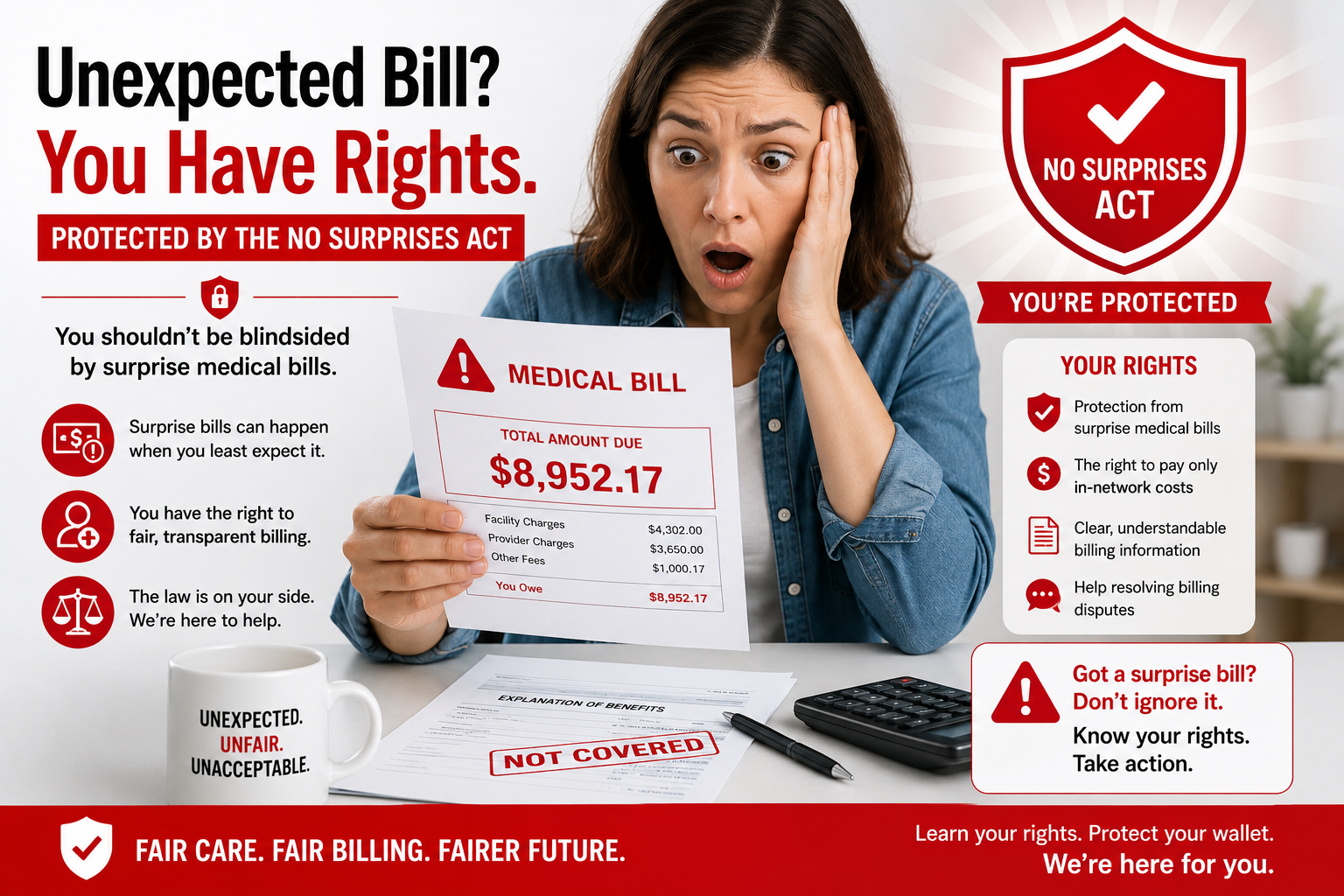
Surprise Medical Bills: Your Rights and Options Under the No Surprises Act
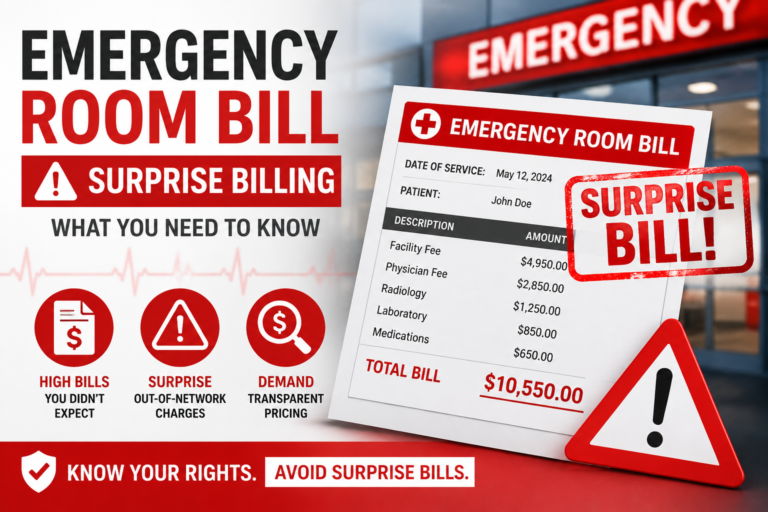
A surprise medical bill arrives when you receive care from a provider you did not know was out of your insurance network — often during an emergency or hospital procedure where you had no opportunity to verify every provider’s network status. These bills can be enormous, arriving weeks after treatment when you are already dealing with recovery. The good news is that federal law now provides significant protection against surprise medical bills. This guide explains your rights and exactly what to do if you receive one.
Disclaimer: This content is for educational purposes only. Laws and protections vary. Consult qualified professionals for advice specific to your situation.
What is a Surprise Medical Bill?
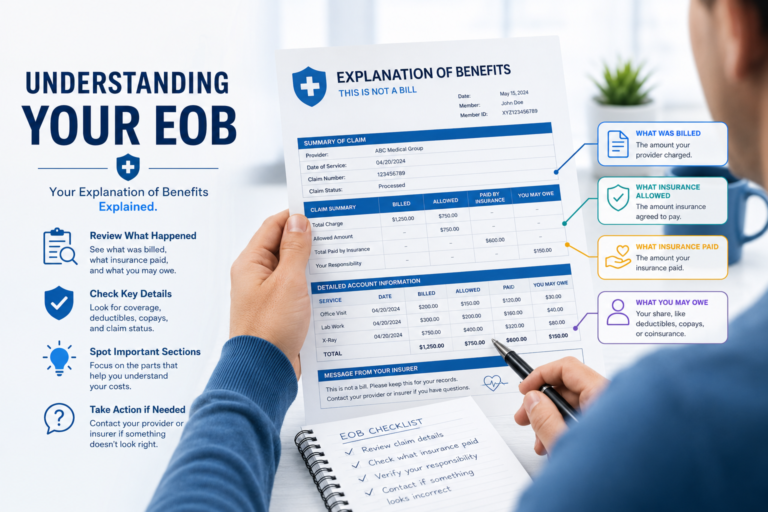
A surprise medical bill — also called balance billing — occurs when an out-of-network provider bills you for the difference between what they charge and what your insurance pays. Common situations include receiving emergency care at an out-of-network facility, being treated by an out-of-network specialist at an in-network hospital without your knowledge, or receiving anesthesia, radiology, or pathology services from out-of-network providers during an in-network procedure. Read our guide on What is an Explanation of Benefits to understand how out-of-network charges appear on your insurance documents.
The No Surprises Act — Federal Protection Since 2022
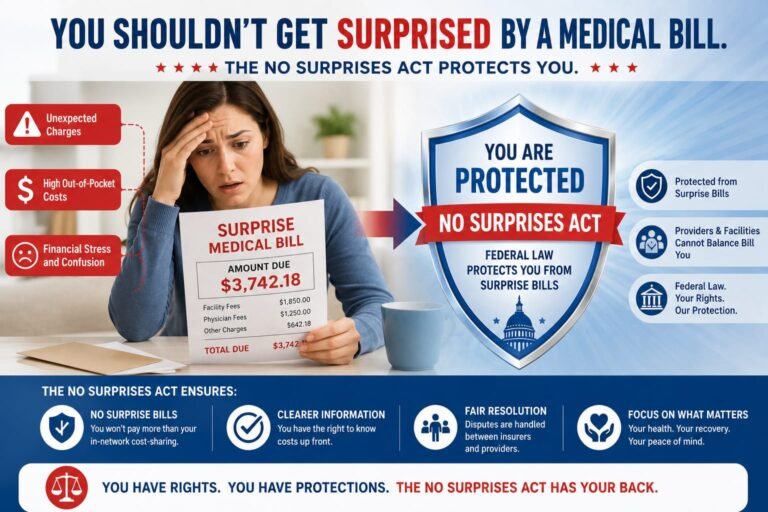
The No Surprises Act, effective January 1, 2022, provides federal protection against many forms of surprise billing. Under this law, if you receive emergency care at any facility, you cannot be billed more than in-network cost-sharing amounts regardless of the facility’s network status. If you receive non-emergency care at an in-network facility from an out-of-network provider, you cannot be billed more than in-network rates unless you gave written consent to out-of-network billing in advance. The law also requires facilities to provide good faith cost estimates before scheduled procedures.
What the No Surprises Act Covers
Emergency services at any facility regardless of network status. Non-emergency services at in-network facilities from out-of-network providers when you did not give consent. Air ambulance services from out-of-network providers. The law applies to most private health insurance plans including employer-sponsored plans and marketplace plans.
What is NOT Covered by the No Surprises Act
Ground ambulance services are not currently covered by the federal law. Services where you signed a valid consent form agreeing to out-of-network billing in advance. Services received at out-of-network facilities for non-emergency care. Medicare and Medicaid have separate protections. Some self-funded employer plans may have different rules.
What to Do When You Receive a Surprise Bill
First, do not pay immediately. Request an itemized bill and verify what was actually provided. Read our guide on How to Read Your Medical Bill and Spot Errors for step by step instructions. Check whether the services fall under No Surprises Act protection. If they do, contact the provider and inform them of your rights under the No Surprises Act. Contact your insurance company and report the surprise bill — they have obligations under the law to work with the provider on reimbursement.
How to File a No Surprises Act Complaint
If a provider violates the No Surprises Act by billing you amounts above in-network cost-sharing for covered services, you can file a complaint with the federal government at www.cms.gov/nosurprises. You can also contact your state insurance commissioner, as many states have additional surprise billing protections. Document everything — save all bills, explanations of benefits, and communications with providers and insurers.
Negotiating Surprise Bills Not Covered by Federal Law
For surprise bills that fall outside No Surprises Act protection, negotiation is still possible and often successful. Read our comprehensive guide on How to Negotiate Your Medical Bill Down for scripts and strategies. Many providers will negotiate surprise bills significantly, especially when presented with evidence of financial hardship or when offered a lump sum settlement. Also explore free resources for medical bill help including hospital charity care programs.
Conclusion
The No Surprises Act has significantly reduced the surprise billing problem for most patients in most situations. Know your rights, verify whether your bill falls under federal protection, and use the complaint process if providers violate the law. For bills not covered by the Act, negotiation and financial assistance programs remain powerful tools. Never pay a surprise medical bill without first understanding your rights and exploring all available options.