Medical Billing Errors: How to Find and Dispute Them 2025
80% — Medical bills estimated to contain at least one error (Medical Billing Advocates of America)
$68B — Estimated annual cost of medical billing errors to the US healthcare system
$0 — Cost to request an itemized bill — you are legally entitled to it
30 days — Typical response time required from hospitals after filing a formal billing dispute
70,000+ — ICD-10 diagnosis codes in the billing system — errors in this complexity are inevitable
Most Medical Bills Have Errors — Including Yours
The Medical Billing Advocates of America estimates up to 80% of medical bills contain at least one error. The US medical billing system uses over 70,000 ICD-10 diagnosis codes and 10,000+ CPT procedure codes — errors happen constantly and at scale. Those errors cost patients billions every year. Finding and disputing them is free, legal, and surprisingly effective.
Step 1: Request Your Complete Itemized Bill
The summary bill showing one or a few totals is not enough — you need the itemized bill listing every individual charge, service, date, and billing code. Call the billing department and say:
Hospitals are legally required to provide this upon request. If they resist, inform them you’re entitled to an itemized bill under federal law. Also request your Explanation of Benefits (EOB) from your insurance company separately — comparing these two documents reveals most errors quickly.
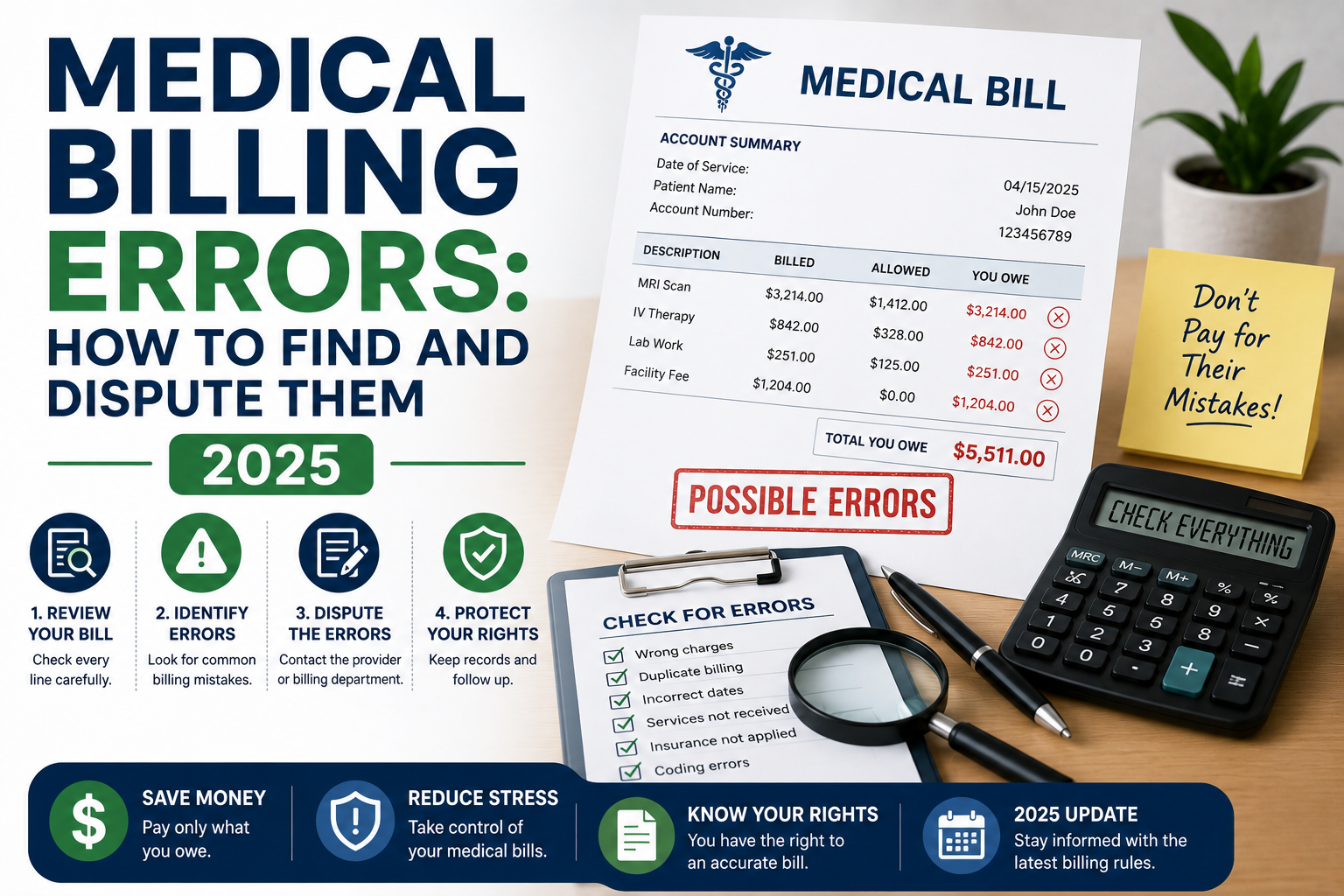
Step 2: The 7 Most Common Billing Errors
Step 3: Cross-Reference With Your EOB
Your Explanation of Benefits (EOB) from your insurer shows what was billed, what they allowed, what they paid, and what you owe. Compare every line of your itemized bill with your EOB line by line. Discrepancies between the two documents are red flags that require explanation from the billing department.
| What to Compare | What to Look For |
|---|---|
| CPT codes: itemized bill vs. EOB | Codes must match — any discrepancy = upcoding or data entry error |
| Total number of line items | More items on bill than EOB = potential duplicate or phantom charges |
| All dates of service | Compare to your own records — wrong date = claim denial trigger |
| Your patient responsibility amount | Bill should match EOB ‘patient responsibility’ — if bill is higher, investigate immediately |
Step 4: File a Formal Billing Dispute
Document errors in a written dispute letter referencing each error by specific line item, CPT code, date, and what was actually received. Send via certified mail to the hospital billing department and keep a copy with your tracking information. The hospital must investigate and respond, typically within 30 days. If unresolved: escalate to your state’s Department of Insurance, the No Surprises Act helpline (1-800-985-3059), or the CMS complaint portal at cms.gov.
Free Tools to Decode Medical Billing Codes
Look up CPT procedure codes at aapc.com/codes (free basic lookup). Look up ICD-10 diagnosis codes at icd10data.com (free). These tools let you verify exactly what each billed code means and whether it matches your actual clinical experience.
Related: How to Negotiate a Medical Bill Down 50% | Surprise Medical Bills: Your Rights and How to Fight Back
Frequently Asked Questions
How do I get my medical records to verify charges?
Under HIPAA, you have the right to request medical records from any provider within 30 days. Most hospitals have patient portals (Epic MyChart, Cerner, etc.) where you can directly access visit notes, lab results, and procedure records to compare against your itemized bill.
What is upcoding and is it illegal?
Upcoding is billing for a more expensive service than was actually performed (e.g., billing for a complex 60-minute consultation when only a brief 15-minute one occurred). When intentional, it’s healthcare fraud under 18 U.S.C. §1347. When accidental, you still have every right to dispute and have it corrected without penalty.
Can I dispute a bill that’s already in collections?
Yes — under the FDCPA, you have 30 days from first contact by a collection agency to request debt validation. The agency must cease all collection activity until they provide proof the debt is valid and accurate. Use this window to review the original itemized bill for errors.
How long do I have to dispute a medical bill?
Act as soon as you receive the itemized bill. Most insurers require claims to be filed within 180 days of the service date. Dispute quickly — the longer you wait, the harder it is to obtain detailed records and the more likely the bill moves to collections where your options narrow.
Should I pay a suspicious bill while disputing it?
Pay only the undisputed portion of the bill. Document clearly in writing that you’re paying the undisputed amount while formally disputing the remainder. This prevents collections action on the undisputed portion while your dispute is being investigated.
What is unbundling in medical billing?
Unbundling is billing separately for services that CMS and AMA guidelines require to be billed together as a single bundled code at a lower combined rate. A classic example: billing separately for a surgical procedure and the follow-up care that CMS includes in the surgical global package. Look for multiple charges on the same day that seem conceptually related.
The Bottom Line
With 80% of bills containing errors, the question is not whether your bill has mistakes but how many. Set aside 2 hours with your itemized bill, your EOB, and your medical records. For a $5,000 bill, finding even one significant error can save you hundreds of dollars. The potential return per hour of review is exceptional.