
Hospital Financial Assistance Programs 2026: How to Get Your Bill Reduced or Eliminated
Most Americans don’t know that every nonprofit hospital in the United States is legally required to offer free or reduced-cost care to qualifying patients — and the income thresholds are often far higher than people assume. This requirement isn’t a favor hospitals do out of goodwill; it’s a federal tax law requirement under Section 501(r) of the Internal Revenue Code. Hospitals that fail to comply risk losing their tax-exempt status.
In 2026, with nonprofit hospitals making up approximately 60% of all US hospitals and for-profit hospitals increasingly offering their own assistance programs to compete, financial assistance is available to more patients than ever use it. This guide shows you exactly how to find, apply for, and maximize these programs.
What Is Hospital Financial Assistance (Charity Care)?
Hospital financial assistance — often called “charity care” — is a program that reduces or eliminates hospital bills for patients who cannot afford to pay. Under the ACA’s Section 501(r) requirements for nonprofit hospitals:
- Every nonprofit hospital must have a written Financial Assistance Policy (FAP)
- The FAP must be widely publicized (posted on the hospital’s website, available in admissions, billing, and ERs)
- The hospital cannot charge FAP-eligible patients more than the “Amounts Generally Billed” (AGB) — essentially the insured rate
- The hospital must make “reasonable efforts” to determine FAP eligibility before sending accounts to collections
Income Limits: Higher Than You Think
The most important thing to understand about charity care income limits is that many hospitals have set them well above the federal poverty level. Common tiers:
- 100% free care: Income up to 200–250% of federal poverty level (about $30,000–$38,000 for an individual in 2026)
- Sliding scale reduction: Income between 250–400% FPL (up to $60,000–$72,000 for an individual)
- Some hospitals: Offer sliding scale assistance up to 500–600% FPL ($75,000–$90,000 for an individual)
For a family of four in 2026, 400% of the federal poverty level is approximately $120,000 in annual household income. Many middle-income families qualify for meaningful assistance. Always apply before assuming you don’t qualify.
Step 1: Find the Hospital’s Financial Assistance Policy
Every nonprofit hospital’s FAP must be publicly available. Find it by:
- Searching “[hospital name] financial assistance policy” or “[hospital name] charity care”
- Calling the billing department and asking: “Do you have a financial assistance program, and where can I find your policy?”
- Checking the hospital’s website under “Billing,” “Patients,” or “Patient Services”
- Asking at patient registration or the emergency department
If the hospital is reluctant to share their FAP, this is itself a potential 501(r) violation you can report to the IRS.
Step 2: Gather Required Documentation
Most financial assistance applications require:
- Proof of income: pay stubs from the last 30–60 days, last 2 years of tax returns, Social Security award letters
- Proof of household size: birth certificates or school enrollment for dependents
- Bank statements: last 1–3 months (some hospitals assess assets, not just income)
- Insurance information: even if uninsured, documentation of insurance status
- Account number and bill from the hospital
Step 3: Complete and Submit the Application
Complete the application thoroughly and accurately. Incomplete applications are routinely rejected — not because you don’t qualify, but because missing documentation provides an easy administrative denial. Submit with certified mail or get a submission confirmation. Follow up within 2 weeks if you haven’t received an acknowledgment. Hospitals are typically required to make a determination within 30 days of a complete application.
Major Hospital System Programs: What to Expect
HCA Healthcare
HCA, the nation’s largest for-profit hospital operator, offers financial assistance to patients with incomes up to 200% FPL. Sliding scale discounts up to 400% FPL. Uninsured patients automatically receive a minimum 30% discount from charges.
CommonSpirit Health
One of the largest nonprofit health systems. Free care up to 250% FPL. Sliding scale up to 500% FPL at many locations. Available for both emergency and elective services.
Ascension Health
Free care up to 200% FPL. Reduced cost care up to 400% FPL. Has a reputation for relatively generous charity care policies across its 140+ hospitals.
What If I Was Already Billed and Paid?
You can apply for financial assistance retroactively. Most hospitals allow applications up to 240 days after the initial billing date (the 501(r) minimum requirement). If you already paid a bill and later discover you would have qualified for assistance, request a retroactive application and potential refund. This happens more than most people realize.
State Supplemental Programs
Beyond individual hospital programs, many states have supplemental programs:
- Medicaid retroactive enrollment: If you were uninsured during care but now qualify for Medicaid, retroactive enrollment can cover past bills in most states
- State charity care mandates: Several states (NJ, CA, NY, IL) have laws requiring hospitals to provide charity care with specific income standards
- 340B hospitals: Hospitals in the 340B drug discount program often have stronger financial assistance programs
Frequently Asked Questions
Can I apply for financial assistance if I have insurance?
Yes — financial assistance can apply to your remaining balance after insurance pays its portion. If your out-of-pocket costs after insurance are burdensome relative to your income, apply for assistance on the remaining balance. Many hospitals will reduce or eliminate post-insurance patient responsibility for qualifying patients.
Does applying for charity care affect my credit?
No — applying for financial assistance has no impact on your credit. The application process is confidential. What affects credit is unpaid bills sent to collections, which financial assistance prevents.
What if the hospital denies my application?
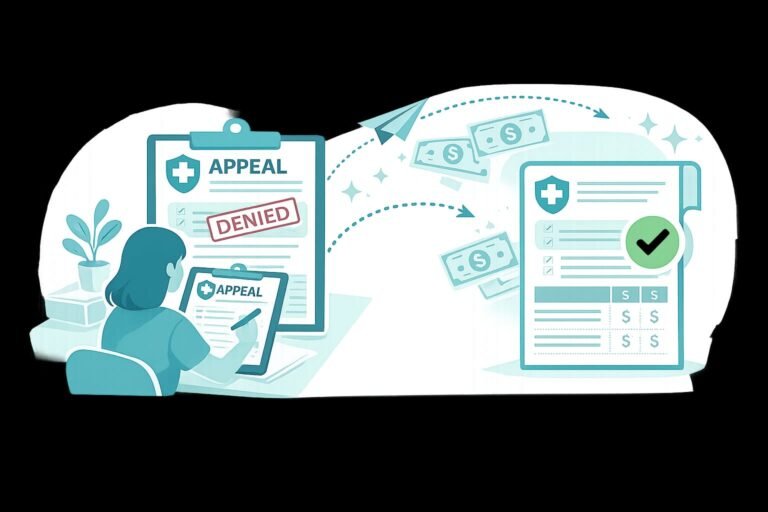
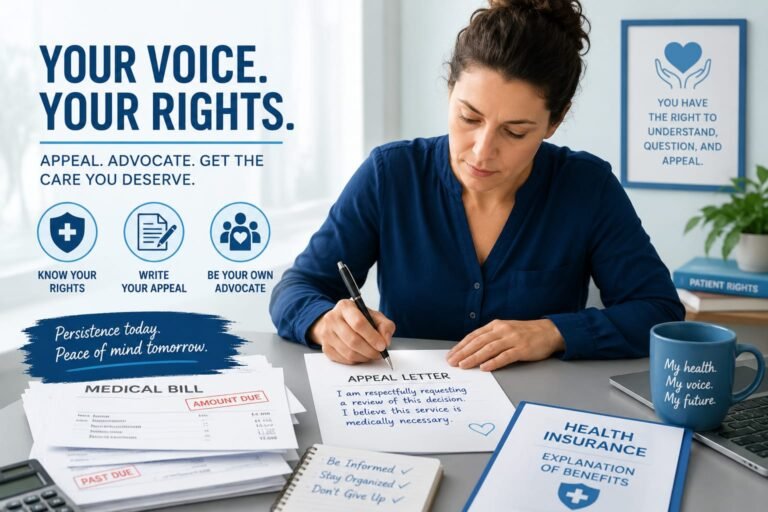
You have the right to appeal. Request the denial reason in writing. If you believe the denial is incorrect (income miscalculated, documentation misinterpreted), submit an appeal with additional documentation. For 501(r) compliance violations, file a complaint with the IRS Exempt Organizations division. Patient advocacy organizations can help with appeals at no cost.
What about for-profit hospitals?
For-profit hospitals aren’t legally required to have charity care programs, but most large for-profit systems do have financial assistance programs — both because it’s good patient relations and because many states mandate it regardless of tax status. Always ask, regardless of the hospital’s ownership structure.
Conclusion
Hospital financial assistance is one of the most underutilized consumer protections in American healthcare. Billions of dollars in available assistance go unclaimed every year because patients don’t know these programs exist or assume they won’t qualify. The application process is straightforward, the potential savings are enormous, and the programs are a legal requirement — not charity in the casual sense, but a structured, enforceable consumer right. If you have a hospital bill you’re struggling with, applying for financial assistance should be your first call, before paying anything, before setting up a payment plan, and before losing sleep over a bill that may be reducible to zero. Combined with the negotiation strategies in our guide on how to negotiate medical bills, these tools give you real power to manage healthcare costs.
Find Financial Assistance at Your Hospital
Free directory of charity care programs at 500+ major hospital systems.