How to Appeal a Health Insurance Denial — Step by Step Guide 2026
Your health insurance company just denied your claim. Maybe it was for a procedure your doctor ordered. Maybe it was for an emergency room visit. Maybe it was for medication you genuinely need. Whatever the reason — you have the legal right to appeal every single insurance denial. And statistically, your chances of winning are better than you might expect. According to the Kaiser Family Foundation, insurance companies deny approximately 17% of all in-network claims. Of the patients who appeal those denials, more than 40% have the original decision overturned. The problem is that most patients never appeal. They receive a denial, assume it is final and either go without the care they need or pay out of pocket for something their insurance should have covered. This guide gives you everything you need to appeal an insurance denial successfully — from understanding why you were denied to filing a formal appeal, requesting a peer-to-peer review and taking your case to external review if needed.
Step 1 — Understand Your Denial Letter
Before you can appeal effectively you need to understand exactly why your claim was denied. Your denial letter is the starting point.
What Your Denial Letter Must Include
Under the Affordable Care Act, every insurance denial letter must include: • The specific reason for the denial — not vague language, but the specific clinical or administrative basis • The specific plan provision relied upon — the exact policy language used to justify the denial • Instructions for appealing — the exact process, address and deadline for filing an appeal • Information about external review rights — your right to have the decision reviewed by an independent organisation If your denial letter does not include all of these elements, contact your insurance company and request a complete denial letter that meets ACA requirements.
Common Denial Reasons and What They Mean
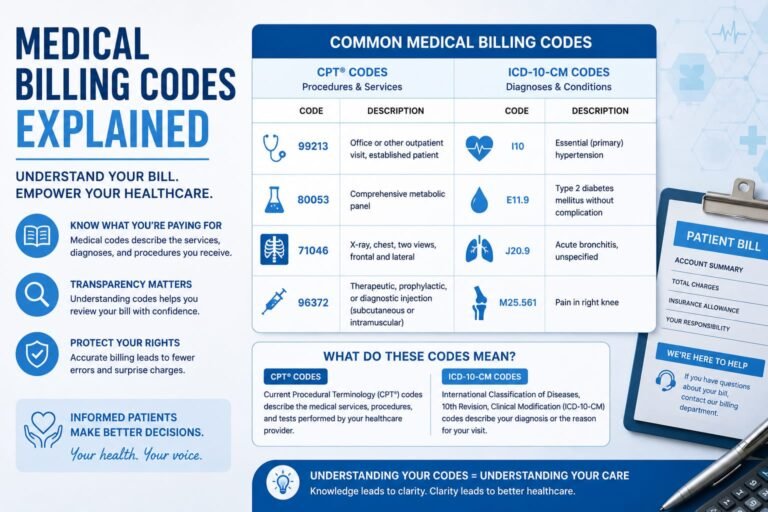
Not medically necessary: The most common denial reason. Your insurance company decided the procedure or treatment was not medically necessary — even if your doctor ordered it. This is one of the most successfully appealed denial reasons. Prior authorisation not obtained: The procedure required pre-approval and either your provider did not get it or it was denied. You can often appeal by demonstrating the medical necessity and urgency that made prior authorisation impractical. Out of network: The provider was not in your insurance network. The No Surprises Act now protects you in many emergency situations — this may be worth investigating. Experimental or investigational: The treatment is classified as experimental. Appeal with evidence from peer-reviewed research and clinical guidelines supporting the treatment’s effectiveness. Covered service limit reached: You have used up your plan’s limit for a specific service. Appeal with documentation of ongoing medical necessity. Coding error: The wrong procedure or diagnosis code was used. This is an administrative error — contact your provider to submit a corrected claim before filing a formal appeal. Coordination of benefits: Your insurer believes another plan should pay first. An administrative issue usually resolved quickly.
Step 2 — Request the Most Important Document First
Before filing your appeal, request one critical document from your insurance company: The clinical criteria used to make the denial decision. Call member services and say: “I received a denial for [service] on claim number [X]. I am preparing an appeal and I need you to send me the complete clinical criteria and guidelines your company used to determine this service was not medically necessary. I also need the specific sections of my policy that were relied upon in making this decision.” Under ACA regulations, you are entitled to this information. Having the exact clinical criteria allows you to directly address and refute each point in your appeal letter.
Step 3 — Request a Peer-to-Peer Review First
Before filing a formal written appeal, there is a faster and often more effective first step that most patients never know about: the peer-to-peer review. A peer-to-peer review is a direct conversation between your treating physician and the insurance company’s medical director. It gives your doctor the opportunity to explain the clinical reasoning behind their decision directly to the person who made the denial.
Why Peer-to-Peer Reviews Are So Effective
Studies show that peer-to-peer reviews overturn medical necessity denials in 60% to 75% of cases. This success rate is dramatically higher than written appeals alone — because the insurance medical director is hearing directly from the treating physician, who can explain nuances and clinical context that a written claim does not capture.
How to Request a Peer-to-Peer Review
Contact your doctor’s office and say: “I received a medical necessity denial from [insurance company] for [procedure/treatment], claim number [X]. I would like to request a peer-to-peer review between Dr [name] and the insurance company’s medical director. Could you please call [insurance company’s provider line] to arrange this?” The peer-to-peer review is typically arranged by the doctor’s office. Most insurance companies have a dedicated provider line for this purpose — your doctor’s billing staff will know the number.
Important — Act Quickly
Most insurance companies allow peer-to-peer reviews within a limited window after the denial — often 30 days. Request this immediately after receiving your denial.
Step 4 — File Your Internal Appeal
If the peer-to-peer review does not resolve the denial — or if your denial is not a medical necessity issue — file a formal internal appeal.
Appeal Deadlines — Do Not Miss These
Under ACA regulations, you must file your appeal within a specific timeframe: • Most plans: 180 days from receiving the denial notice • Urgent/emergency situations: Appeals must be decided within 72 hours • Check your denial letter for the exact deadline that applies to your specific plan Missing the appeal deadline can permanently waive your right to appeal. File as soon as possible.
What to Include in Your Internal Appeal
A strong internal appeal includes: ✅ Your appeal letter — addressing the specific denial reason point by point ✅ Letter of medical necessity from your doctor — detailed explanation of why this treatment is medically necessary for your specific condition ✅ Your complete medical records — clinical notes, test results, treatment history supporting medical necessity ✅ Clinical guidelines — from the AMA, relevant specialty organisations or peer-reviewed research supporting the treatment ✅ A copy of the denial letter — with the denial reason clearly highlighted ✅ A copy of your insurance card and policy number
The Internal Appeal Letter Template
“[Your Name] [Your Address] [Your Date of Birth] [Insurance ID Number] [Date] [Insurance Company Name] Appeals Department [Address from denial letter] Re: Appeal of Adverse Benefit Determination Claim Number: [Claim Number] Patient Name: [Your Name] Date of Service: [Date] Provider: [Provider Name] Service Denied: [Description] Dear Appeals Department, I am writing to formally appeal the adverse benefit determination dated [date] regarding the above claim. Your denial states that [quote the exact denial reason from the denial letter]. I respectfully disagree with this determination for the following reasons: [Point 1 — Address the specific denial reason with clinical evidence. Example: “Your denial states this procedure is not medically necessary. However, clinical guidelines published by the [relevant medical association] clearly support this treatment for patients with [diagnosis]. A copy of these guidelines is enclosed.”] [Point 2 — Reference your doctor’s clinical judgment. Example: “My treating physician, Dr [name], has determined that this procedure is medically necessary based on [clinical reasons]. Dr [name]’s detailed letter of medical necessity is enclosed.”] [Point 3 — Reference your medical history. Example: “I have been receiving treatment for [condition] since [date]. My medical records, enclosed herewith, document the progression of my condition and the medical necessity of the requested treatment.”] In support of this appeal I am enclosing the following: 1. Letter of medical necessity from Dr [name] dated [date] 2. Relevant medical records from [date range] 3. Clinical guidelines from [organisation] supporting this treatment 4. [Any other supporting documents] I respectfully request that you overturn this denial and approve coverage for [service] in accordance with my plan benefits. If this appeal is upheld, please provide a complete written explanation including the specific clinical criteria applied and the specific plan language relied upon. Sincerely, [Your Name] [Your Phone Number] [Your Email]”
How to Submit Your Appeal
Submit by certified mail with return receipt requested. This creates a legal record that your appeal was received before the deadline. Keep a complete copy of everything you submit — your letter and every enclosure.
Step 5 — Request External Review if Internal Appeal Fails
If your insurance company upholds its denial after your internal appeal, you have one more powerful option: independent external review. External review is arguably the most powerful tool available to patients in insurance disputes. An independent organisation — completely separate from your insurance company — reviews your case and issues a binding decision. Your insurance company must accept and implement the decision of the external reviewer.
Your Legal Right to External Review
Under the ACA, you have the right to external review for any denial based on medical necessity, appropriateness, healthcare setting or level of care — as well as for experimental treatment denials.
How to Request External Review
Step 1: Request external review within the timeframe specified in your internal appeal denial letter — typically 4 months from the date of the internal appeal decision. Step 2: Determine which external review process applies to your plan: • Fully-insured plans (most individual and small employer plans): Contact your State Insurance Commissioner — they oversee the external review process in your state. • Self-funded employer plans (most large employers): Contact the US Department of Labor Employee Benefits Security Administration (EBSA) at 1-866-444-3272 or dol.gov/agencies/ebsa. Step 3: Complete the external review request form — available from your state insurance department or EBSA. Step 4: Submit the same supporting documentation used in your internal appeal. Step 5: An independent medical reviewer examines your case — typically within 45 days (or 72 hours for urgent cases). Step 6: If the reviewer overturns the denial, your insurance company is legally required to pay the claim.
External Review Success Rates
According to data from the Government Accountability Office (GAO), patients win external review cases approximately 39% to 59% of the time depending on the type of claim. For medical necessity cases specifically, success rates are among the highest — particularly when strong clinical evidence and a physician’s letter of medical necessity are submitted.
Step 6 — File a Complaint With Your State Insurance Commissioner
Alongside your external review request — or as an alternative if external review is not available — file a complaint with your State Insurance Commissioner. Your State Insurance Commissioner: • Regulates insurance companies operating in your state • Has authority to investigate bad faith claim handling • Can order insurance companies to reconsider denials that violate state law • Tracks complaint patterns — repeated complaints about the same insurer attract regulatory attention To find your State Insurance Commissioner: naic.org/state_web_map.htm Filing a complaint takes 15 minutes and costs nothing. It creates a formal regulatory record and often prompts insurers to reconsider denials simply to avoid regulatory scrutiny.
Special Situations — Important Protections You Need to Know
Emergency Care — Strong Federal Protections
For emergency care, insurance companies have significant obligations under federal law: • They must cover emergency services regardless of whether the provider is in network • They cannot require prior authorisation for emergency care • They must use an in-network cost-sharing standard when calculating your responsibility for out-of-network emergency care If your emergency care claim is denied or you are charged out-of-network rates for emergency services, this may violate federal law. File a complaint immediately with CMS at cms.gov/cciio/resources/consumer-assistance-grants/consumer-assistance-information.
The No Surprises Act — Protection From Balance Billing
The No Surprises Act (effective January 2022) protects patients from surprise out-of-network bills in specific situations: • Emergency care at any facility • Non-emergency care at an in-network facility where you receive care from an out-of-network provider without prior notice • Air ambulance services If you receive a bill that appears to violate the No Surprises Act: • Contact the No Surprises Help Desk: 1-800-985-3059 • File a complaint at: cms.gov/nosurprises
Mental Health Parity
The Mental Health Parity and Addiction Equity Act requires insurance companies to cover mental health and substance use disorder benefits on the same basis as physical health benefits. If your mental health treatment is denied in ways that physical health treatment would not be denied, this may violate parity law. Contact your State Insurance Commissioner and the US Department of Labor.
Medicaid and Medicare Appeals
Medicare and Medicaid have their own distinct appeals processes: Medicare: 5 levels of appeal — redetermination, reconsideration, ALJ hearing, Medicare Appeals Council review, federal court review. Start by calling 1-800-MEDICARE. Medicaid: Contact your state Medicaid agency for the specific appeal process in your state. You generally have 90 days from the date of the adverse action to file an appeal.
Real Case Study — How One Patient Won a $31,000 Insurance Denial
When James K. from Minnesota needed spinal surgery following a workplace injury, his health insurance denied the claim for $31,000 — classifying the surgery as “not medically necessary” because he had not completed a full course of physical therapy first. James had tried physical therapy for 8 weeks but had been forced to stop due to severe pain. His surgeon had documented that continued conservative treatment was contraindicated given the severity of his condition. Here is exactly how James won his appeal: Step 1 — Requested peer-to-peer review immediately Within 3 days of receiving the denial, James asked his surgeon’s office to request a peer-to-peer review with the insurance medical director. During the review, James’s surgeon explained that the standard physical therapy protocol was contraindicated for James’s specific condition and that delaying surgery posed a significant risk of permanent nerve damage. Result: The insurance medical director acknowledged the clinical concerns but maintained the denial — saying he would need to see more documentation. Step 2 — Filed a comprehensive internal appeal James’s surgical team assembled a detailed appeal package including: • A 4-page letter of medical necessity from his surgeon with detailed clinical reasoning • MRI results showing the severity of nerve compression • Physical therapy records documenting James’s failed conservative treatment • Guidelines from the American Academy of Orthopaedic Surgeons (AAOS) supporting surgical intervention for James’s specific diagnosis • Published peer-reviewed research on outcomes for delayed surgical intervention James submitted the appeal by certified mail 3 weeks after the denial. Result: The internal appeal was denied — the insurance company maintained its position. Step 3 — Filed for external review James filed for external review through Minnesota’s Department of Commerce within 2 weeks of the internal appeal denial. An independent orthopaedic surgeon reviewed James’s complete file. The reviewer found that James’s surgical needs clearly met the standard criteria for medical necessity given the MRI findings, failed conservative treatment and risk of permanent neurological damage. Result: The external reviewer overturned the denial completely. Insurance paid $31,000. Total time from first denial to external review win: 4 months. “The external reviewer was completely independent,” James said. “He looked at the actual clinical evidence — not the insurance company’s administrative criteria — and the decision was obvious. I just had to know the process existed.”
When to Get Professional Help With Your Appeal
Most insurance appeals can be handled without professional assistance using the steps in this guide. However, consider professional help when:
Patient Advocacy Organisations
Patient Advocate Foundation (PAF) — provides free professional case management for patients with serious illness, including insurance denial appeals. Trained case managers advocate directly with insurance companies on your behalf. • Website: patientadvocate.org • Phone: 1-800-532-5274 State Insurance Commissioner Consumer Assistance Programs — many states fund free consumer assistance programs specifically to help patients navigate insurance appeals. Find your state’s program at cms.gov/cciio/resources/consumer-assistance-grants.
Healthcare Attorneys
Consider consulting a healthcare attorney if: • The denied claim exceeds $10,000 • The denial involves ongoing life-sustaining treatment • You have evidence of bad faith insurance practices • You have exhausted all other appeal options unsuccessfully Many healthcare attorneys offer free initial consultations and some take insurance dispute cases on contingency.
Medical Billing Advocates
Professional medical billing advocates can help with insurance appeals — particularly those involving billing code errors or coverage disputes. They typically work on contingency (25–35% of what they recover for you). Find a certified advocate through the Alliance of Claims Assistance Professionals at claims.org.
Frequently Asked Questions
How long does the insurance appeal process take?
Internal appeals for post-service claims: insurance company must respond within 60 days. Urgent care appeals: within 72 hours. Pre-service appeals: within 30 days. External reviews: typically 45 days, or 72 hours for urgent cases. The entire process from initial denial to external review decision can take 3 to 6 months for non-urgent cases — but the potential payoff justifies the time investment.
Can I continue receiving treatment while my appeal is pending?
Yes — with important protections. If you are in the middle of an approved course of treatment and your insurance tries to reduce or terminate that treatment, you have the right to continue receiving that treatment at no additional cost while the appeal is pending. This is called the continuity of care protection under the ACA.
What is the difference between internal and external appeal?
An internal appeal is reviewed by the insurance company itself — a different team than the one that made the original denial decision. An external review is conducted by an independent organisation completely separate from your insurance company, and their decision is legally binding on the insurer. Always exhaust internal appeal first, then proceed to external review if needed.
Does appealing an insurance denial cost anything?
Internal appeals are completely free — insurers cannot charge you to appeal. External reviews typically cost $25 or less, and this fee is waived if the external reviewer overturns the denial. In most states, external review is completely free.
What if my employer’s insurance denies my appeal?
Large employer self-funded plans are governed by federal ERISA law rather than state insurance law. For these plans, the external review process goes through the federal Department of Labor rather than your state insurance commissioner. Contact EBSA at 1-866-444-3272 or dol.gov/agencies/ebsa.
Can I appeal a prior authorisation denial before receiving treatment?
Yes — and you should. A pre-service appeal (appealing before receiving care) follows the same basic process as a post-service appeal. The advantage is that a successful pre-service appeal means your care is covered before you receive it — avoiding the bill entirely. Urgent pre-service appeals must be decided within 72 hours.
What happens if I lose my external review?
If the external reviewer upholds the denial, you have limited further options through the insurance appeals process. However, you can still: file a complaint with your State Insurance Commissioner, consult a healthcare attorney about potential bad faith insurance practices, negotiate directly with the provider to reduce your out-of-pocket cost, or apply for financial assistance programs. See our guide: Hospital Financial Assistance Programs — The Complete Guide for 2026.
Your Complete Insurance Appeal Action Plan
Within 24 hours of receiving your denial: 1. Read the denial letter carefully — identify the specific denial reason 2. Call your doctor’s office — request a peer-to-peer review immediately 3. Call your insurance company — request the clinical criteria used in the denial decision Within 1 week: 4. Request a complete copy of your medical records related to the denied service 5. Ask your doctor to write a detailed letter of medical necessity 6. Research clinical guidelines from relevant medical associations supporting the treatment 7. Begin drafting your appeal letter using the template in this guide Within 2–3 weeks: 8. Complete and submit your internal appeal — by certified mail 9. File a complaint with your State Insurance Commissioner simultaneously 10. Keep copies of everything submitted If internal appeal is denied: 11. File for external review immediately — within the deadline in the denial letter 12. Consider contacting Patient Advocate Foundation for complex cases 13. Consult a healthcare attorney if the amount is significant While appeal is pending: 14. Continue any already-approved treatment — ACA continuity of care protections apply 15. Negotiate with your provider to delay billing while appeal is in process 16. Apply for hospital financial assistance as a backup plan — see our guide: Hospital Financial Assistance Programs — The Complete Guide You have the right to fight every insurance denial. The system is designed to make the process difficult — but nearly half of all external reviews are decided in the patient’s favour. Knowledge, preparation and persistence are your most powerful tools. Related guides: • How to Dispute a Medical Bill With Your Insurance Company • Hospital Financial Assistance Programs — The Complete Guide for 2026 • What to Do If You Can’t Pay a Hospital Bill — 6 Options • Medical Debt Forgiveness Programs 2026 — The Complete ListMedical and Financial Disclaimer: The information on FightMedicalBill.com is for educational purposes only and does not constitute medical, legal or financial advice. Insurance appeal rights, processes and deadlines vary by plan type, state and year. Always refer to your specific plan documents and denial letter for the exact rules that apply to your situation. Consult a qualified healthcare attorney or patient advocate for complex cases.