Free Medical Bill Advocates — How They Work and Where to Find Them
Navigating medical bills, insurance denials and hospital financial assistance applications is genuinely complicated. Most patients face this complexity alone — without the knowledge, time or energy to fight effectively.
But you do not have to do it alone.
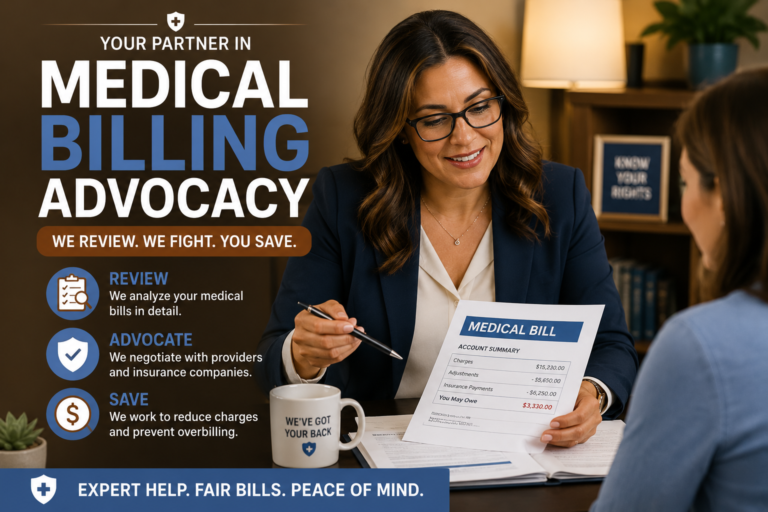
Medical bill advocates are professionals and trained volunteers who fight on your behalf — negotiating with hospitals, disputing insurance denials, identifying billing errors and finding financial assistance you may not know about.
And many of the most effective advocates are available at absolutely no cost to you.
This guide explains the different types of medical bill advocates, the difference between free and paid advocates, where to find free help and how to get the most out of working with an advocate.
What Is a Medical Bill Advocate?
A medical bill advocate is someone who acts on your behalf in disputes with hospitals, insurance companies and debt collectors regarding your medical bills. Depending on their background and role, advocates can:
- Review your medical bills for errors and overcharges
- Negotiate directly with hospital billing departments to reduce your balance
- Help you apply for charity care and financial assistance programs
- File insurance appeals and request external reviews on your behalf
- Navigate complex insurance denial situations
- Identify government assistance programs you may qualify for
- Represent your interests in payment plan negotiations
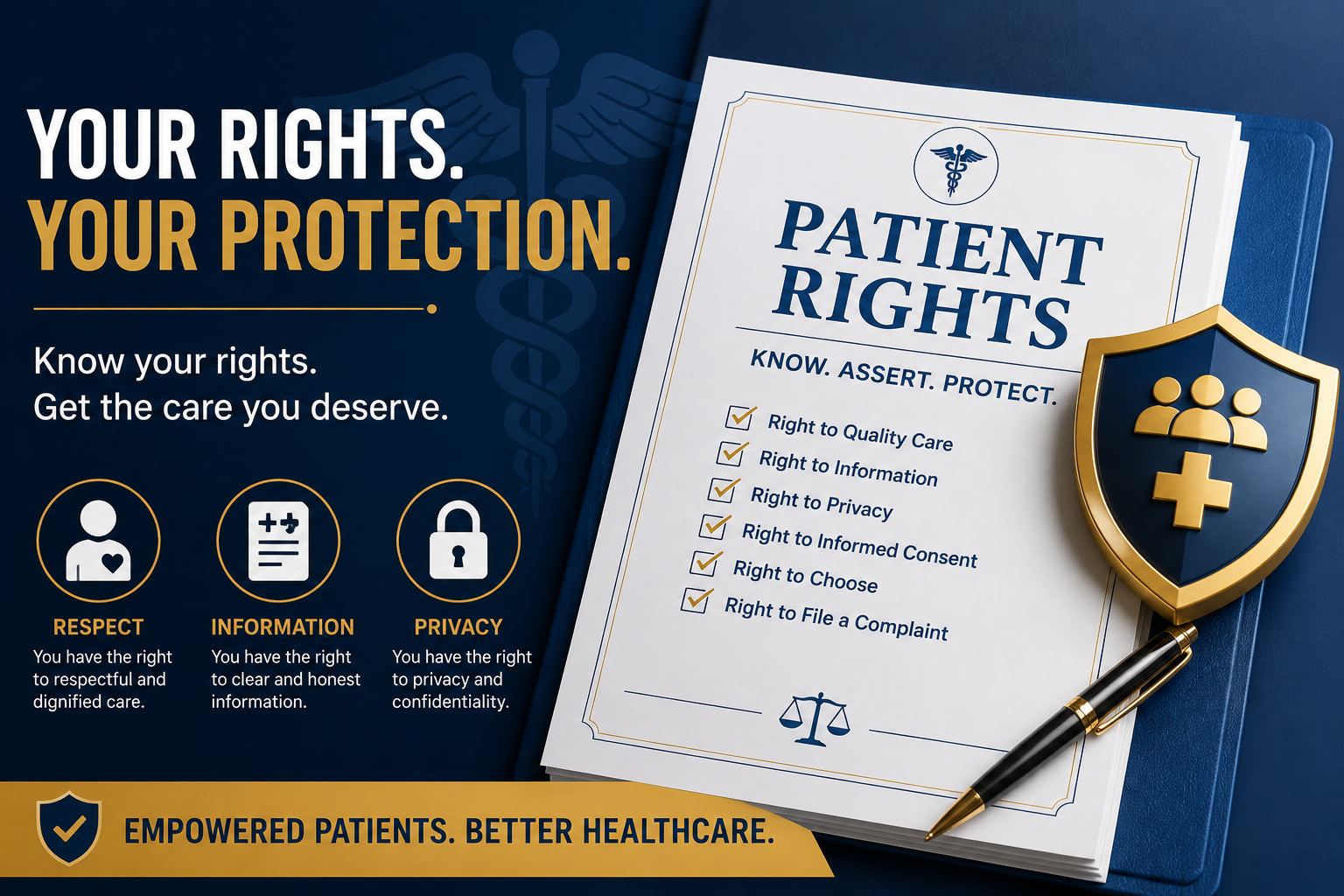
- Help you understand your rights as a patient
The Two Types of Medical Bill Advocates
There are two fundamentally different types of medical bill advocates — and understanding the difference is essential before you seek help.
Type 1 — Free Patient Advocates
Free patient advocates are typically:
- Non-profit organisation staff members or trained volunteers
- Hospital patient financial counsellors (employed by the hospital)
- State and federally funded consumer assistance program staff
- Community health workers and social workers
Cost to you: Zero.
Free advocates are most effective for:
- Applying for financial assistance and charity care
- Understanding your rights and options
- Navigating insurance appeals
- Connecting with government and community assistance programs
- Complex cases involving serious illness
Important distinction: Hospital patient financial counsellors are employed by the hospital — their advocacy has limits because they ultimately work for the hospital. Independent non-profit advocates work for you.
Type 2 — Professional Paid Advocates (Contingency Basis)
Professional medical billing advocates are trained specialists who work on your behalf for a fee — typically a percentage of what they save you.
Cost structure: Most professional advocates charge 25–35% of whatever they recover for you. If they find nothing or save you nothing, you pay nothing.
Example: If a professional advocate finds $8,000 in billing errors and secures a $4,000 reduction through negotiation — and their fee is 30% — they keep $3,600 and you save $8,400 net.
Professional advocates are most effective for:
- Large bills (typically over $5,000) where the potential savings justify the contingency fee
- Complex billing disputes involving multiple providers
- Cases where billing errors are suspected but difficult to identify
- Situations where initial self-advocacy attempts have failed
The Best Free Medical Bill Advocacy Organisations in 2026
- Dollar For
What they do: Dollar For specifically helps patients apply for hospital charity care programs. Their trained volunteers guide patients through the entire charity care application process — from finding the hospital’s policy to completing and submitting the application.
Who they help: Any patient with an outstanding hospital bill who may qualify for charity care.
Cost: Completely free.
How to access: dollarfor.org — submit your information online. A volunteer will contact you and guide you through the process.
Results: Dollar For volunteers have helped patients access tens of millions of dollars in charity care assistance.
- Patient Advocate Foundation (PAF)
What they do: PAF provides free professional case management services for patients with serious illness dealing with insurance denials, access to care issues and medical debt. Their trained case managers advocate directly with insurance companies and healthcare providers.
Who they help: Patients with chronic, life-threatening or life-altering medical conditions facing insurance or financial barriers to care.
Cost: Completely free.
How to access:
- Website: patientadvocate.org
- Phone: 1-800-532-5274
- Applications can be submitted online
Co-Pay Relief Program: PAF also runs a separate Co-Pay Relief Program that provides direct financial assistance to help patients with co-payments and deductibles.
- State Insurance Commissioner Consumer Assistance Programs
What they do: Many states fund Consumer Assistance Programs (CAPs) that provide free help to patients navigating insurance appeals, coverage disputes and billing issues.
Who they help: Any resident with an insurance-related issue.
Cost: Completely free — funded by state government.
How to find your state’s program: cms.gov/cciio/resources/consumer-assistance-grants/consumer-assistance-information
- Benefits.gov and 211
What they do: Connect patients with federal and state assistance programs, including medical debt assistance, Medicaid, CHIP and local community resources.
How to access:
- Dial 211 from any phone (most states)
- Visit benefits.gov
- Visit 211.org
5. Non-Profit Credit Counselling Agencies (NFCC Members)
What they do: Non-profit credit counsellors help patients with medical debt as part of broader financial counselling services. They can negotiate payment plans with hospitals and collection agencies and create comprehensive debt management plans. Who they help: Anyone with medical debt — especially when medical debt is part of a larger financial challenge. Cost: Initial consultation is free. Full debt management plans typically cost $25–$55 per month — a fraction of what for-profit companies charge. How to find an NFCC member: • Call: 1-800-388-2227 • Website: nfcc.org Important: Only use agencies affiliated with the National Foundation for Credit Counseling (NFCC) or the Financial Counseling Association of America (FCAA). Avoid for-profit debt settlement companies.
6. Legal Aid Organisations
What they do: Legal aid organisations provide free legal representation to low-income individuals in civil matters — including medical debt disputes, debt collection harassment and cases where hospitals have violated their charity care obligations. Who they help: Low to moderate income individuals facing legal issues related to medical debt. Cost: Completely free — income eligibility requirements apply. How to find legal aid near you: • lawhelp.org — searchable database of legal aid organisations by state • lawhelp.org/find-help • Your state bar association’s referral service
7. Disease-Specific Advocacy Organisations
Many disease-specific organisations provide free patient advocates for their specific patient communities. Examples: Cancer: • Cancer Support Community — cancersupportcommunity.org — free navigators and financial counsellors • Triage Cancer — triagecancer.org — free legal and financial guidance for cancer patients Heart Disease: • American Heart Association — heart.org — patient support resources including financial navigation Kidney Disease: • American Kidney Fund — kidneyfund.org — free patient services including financial counselling HIV/AIDS: • AIDS Drug Assistance Programs (ADAPs) — state-run programs providing free medications and support services
8. Hospital Patient Financial Advocates
Every hospital has an internal patient advocate or patient financial counsellor. While they are employed by the hospital rather than by you, they can still: • Explain your bill in detail • Identify potential billing errors • Guide you through the charity care application process • Connect you with community resources • Help navigate insurance appeal processes To access your hospital’s patient advocate: • Ask any hospital staff member to connect you with the Patient Advocate or Patient Financial Services department • Look for the Patient Advocate’s office near the hospital entrance or billing department • Ask the billing department specifically for a patient financial counsellor — not a standard billing representative
How to Work Effectively With a Free Medical Bill Advocate
Getting the most from your free advocate requires preparation and clear communication.
Before Contacting an Advocate
Gather these documents before your first contact: • Your hospital bill or bills — including account numbers • Your insurance information — carrier, policy number, group number • Your Explanation of Benefits (EOB) from your insurance company • Any denial letters you have received • Basic income information — recent pay stubs or tax return • A list of questions and the specific outcome you are hoping to achieve
Be Clear About What You Need
When you first contact an advocacy organisation, be specific about your situation: “I have a $14,000 hospital bill from [hospital name] following [type of care] on [date]. I am uninsured and cannot afford to pay. I need help applying for financial assistance and checking the bill for errors. My household income is approximately [amount] for a family of [size].” Specific information allows the advocate to immediately assess how they can help and what programs you may qualify for.
Respond Promptly to Requests
Advocates working on your behalf will need documentation from you. Respond to document requests as quickly as possible — delays can cause you to miss application deadlines or appeal windows.
Follow Up Regularly
Even with a dedicated advocate working on your case, stay actively involved. Follow up every 7 to 10 days to check the status of applications and appeals. Your engagement signals that this case matters and keeps it moving forward.
Professional Medical Billing Advocates — When to Use Them
While free advocacy resources are excellent for most situations, there are circumstances where hiring a professional medical billing advocate makes financial sense.
When a Professional Advocate Is Worth It
Consider hiring a professional advocate when: • Your bill exceeds $5,000 and you suspect significant billing errors • You have complex bills from multiple providers after a major medical event • Your initial self-advocacy attempts have not produced results • You have received conflicting information from the hospital and insurance company • You have already been sent to collections and need aggressive negotiation • You are too ill, too busy or too overwhelmed to handle the process yourself
What Professional Advocates Do
Professional medical billing advocates typically: • Conduct a comprehensive audit of all your medical bills • Review CPT and ICD codes for accuracy • Compare charges against fair market prices and Medicare rates • Identify errors, duplicate charges and phantom charges • Negotiate directly with hospital billing departments • Handle insurance appeals and external reviews • Coordinate with collection agencies if applicable • Prepare detailed dispute documentation
How Professional Advocates Are Paid
The most reputable professional advocates work on a contingency basis: • Contingency fee: Typically 25–35% of the total amount saved • No savings — no fee: If the advocate finds no errors or achieves no reduction, you pay nothing • Upfront fee warning: Be cautious of any advocate who requires significant upfront payment before achieving results
How to Find a Reputable Professional Advocate
Look for certified professionals through these organisations: Alliance of Claims Assistance Professionals (ACAP) • Website: claims.org • Certifies Claims Assistance Professionals (CAPs) who help with insurance claims and billing disputes • Searchable member directory by location Patient Advocate Certification Board (PACB) • Website: pacboard.org • Certifies Board Certified Patient Advocates (BCPAs) • Directory of certified advocates available on website Medical Billing Advocates of America (MBAA) • Website: billadvocates.com • Advocates who specifically focus on medical billing errors and hospital bill disputes
Questions to Ask Before Hiring a Professional Advocate
Before signing any agreement with a professional advocate: 1. What is your fee structure? Do you work on contingency? 2. What is the minimum bill size you work with? 3. What certifications or credentials do you hold? 4. Can you provide references from previous clients? 5. What is the typical savings you achieve for clients with bills similar to mine? 6. How long does the process typically take? 7. What happens if you find no errors or achieve no reduction? 8. Do I need to sign any agreements before you begin reviewing my case? Any reputable professional will answer all of these questions clearly before asking you to commit to anything.
Red Flags — Avoid These Types of “Advocates”
The medical advocacy space attracts scammers who prey on people desperate to reduce unmanageable medical bills. Watch for these red flags:
Red Flag 1 — Large Upfront Fees
Any organisation demanding hundreds or thousands of dollars upfront — before doing any work or achieving any results — should be avoided. Legitimate contingency-based advocates risk their time on your case. If they do not save you money, they do not get paid.
Red Flag 2 — Guaranteed Outcomes
No legitimate advocate can guarantee specific outcomes. Medical billing disputes involve complex negotiations with multiple parties. Anyone promising a specific percentage reduction or guaranteed approval before reviewing your case is making promises they cannot keep.
Red Flag 3 — Pressure to Act Immediately
Legitimate organisations give you time to review their services and ask questions. High-pressure tactics — “you must sign up today or lose this opportunity” — are a sign of a scam.
Red Flag 4 — Cannot Verify Non-Profit Status
For organisations claiming to be non-profits: verify their status at candid.org or the IRS Tax Exempt Organisation Search before sharing any personal or financial information.
Red Flag 5 — Asking for Social Security Number or Bank Details Early
Legitimate advocates need your medical and insurance information — not your SSN or bank account details — to begin reviewing your case. Any organisation requesting financial account information before providing any services should be treated with extreme caution.
adequate results • You want a trained professional conducting a thorough billing audit • The complexity of your case is beyond what you can manage alone The most important thing is to take action — through whatever channel works for you. The worst outcome is doing nothing and paying more than you owe.
Frequently Asked Questions
What exactly can a free medical bill advocate do for me?
Free advocates can review your bills for errors, help you apply for charity care and financial assistance, navigate insurance appeals, connect you with government assistance programs, negotiate payment plans and explain your rights as a patient. The specific services vary by organisation — contact them directly to discuss your situation and what they can offer.
How long does it take to get help from a free advocate?
Response times vary significantly by organisation. Dollar For volunteers typically contact applicants within a few business days. Patient Advocate Foundation case managers are usually assigned within 2 to 5 business days. Legal aid organisations may have waiting lists depending on your area. Always apply as soon as possible — do not wait until your account is in collections.
Can a free advocate help me even if my bill is already in collections?
Yes. Dollar For, PAF and legal aid organisations can all help with bills that have already gone to collections. The options may be more limited than before collections — but help is still available. Act immediately rather than waiting further.
Do I have to disclose my income to a free advocate?
For advocates helping you apply for financial assistance programs, yes — income information is required because eligibility is income-based. This information is kept confidential and is used only to determine your eligibility for assistance programs. Organisations like PAF are bound by strict confidentiality requirements.
Can I use a free advocate and also try to resolve the bill myself?
Absolutely. You can pursue multiple approaches simultaneously. For example, you could contact Dollar For for help with the charity care application while also reviewing your itemised bill yourself for errors. The more avenues you pursue, the more likely you are to achieve a satisfactory resolution.
What if the free advocate cannot help me fully?
If a free advocate reaches the limits of what they can do, they will typically refer you to other resources — professional advocates, legal aid, state programs or other non-profit organisations. Use these referrals. The advocacy ecosystem is designed with multiple layers of support.
Is there a risk that using a patient advocate will anger my hospital or doctor?
No. Patient advocacy is a recognised and accepted part of the healthcare system. Hospitals routinely work with patient advocates — including their own internal patient advocates. Professional advocates deal with hospital billing departments regularly and have established working relationships. Using an advocate does not jeopardise your care or your relationship with your providers.
Your Advocate Action Plan — Start Today
If you have a hospital bill you cannot pay: 1. Contact Dollar For at dollarfor.org — they will help you apply for charity care 2. Call 211 — find local assistance programs 3. Contact your hospital’s Patient Financial Services department directly If you have a serious illness and complex bills: 4. Apply to Patient Advocate Foundation at patientadvocate.org 5. Check for a disease-specific advocacy organisation for your condition 6. Contact your State Insurance Commissioner’s consumer assistance program If you have large bills and suspect significant errors: 7. Consider a professional advocate — find certified advocates at claims.org 8. Request a free consultation before signing anything 9. Compare 2–3 advocates before selecting one If you need legal help: 10. Find free legal aid at lawhelp.org 11. Contact your state bar association’s lawyer referral service 12. Ask PAF to refer you to a healthcare attorney if needed You do not have to face your medical bills alone. The resources in this guide collectively help millions of Americans every year. Take the first step today — even a single phone call can change your situation entirely. Related guides to use alongside your advocate: • How to Negotiate Medical Bills After Surgery — Save Up to 80% • Hospital Financial Assistance Programs — The Complete Guide for 2026 • Medical Debt Forgiveness Programs 2026 — The Complete List • How to Appeal a Health Insurance Denial — Step by Step GuideMedical and Financial Disclaimer: The information on FightMedicalBill.com is for educational purposes only and does not constitute medical, legal or financial advice. Advocacy organisations, their services and eligibility requirements change regularly. Always verify current information directly with each organisation before relying on it. For legal advice specific to your situation, consult a qualified attorney.