How to Read Your Medical Bill and Spot Errors
Medical bills are among the most confusing documents most people ever receive. They are full of medical codes, cryptic abbreviations, and charges that are difficult to understand without specialized knowledge. Yet studies consistently show that a significant percentage of medical bills contain errors — and patients who never review their bills pay for mistakes they should not owe. This guide teaches you exactly how to read your medical bill and spot the errors that could be costing you money.
Disclaimer: This content is for educational purposes only and does not constitute legal or financial advice. Always consult qualified professionals for advice specific to your situation.
Why Medical Bills Are So Confusing
Hospitals use standardized billing codes — CPT codes for procedures and ICD codes for diagnoses — that mean nothing to most patients. Bills often combine charges from multiple providers into one statement, or split them across multiple statements. Insurance payments, adjustments, and patient responsibility amounts are often displayed in confusing ways. This complexity is not accidental — but understanding it is your first line of defense against overpaying.
Step 1 — Request an Itemized Bill
The summary bill you receive after a hospital visit shows totals but not details. Before you can spot errors you need an itemized bill that shows every individual charge. Call the hospital billing department and specifically request an itemized statement. You are legally entitled to this. Ask for it in writing if possible. The itemized bill may be several pages long for even a short hospital stay — this is normal.
Step 2 — Check Your Personal Information
Start with the basics. Verify your name, date of birth, insurance ID number, and group number are all correct. Errors in personal or insurance information can cause claims to be processed incorrectly or denied entirely. Also verify the dates of service match when you actually received care.
Step 3 — Check for Duplicate Charges
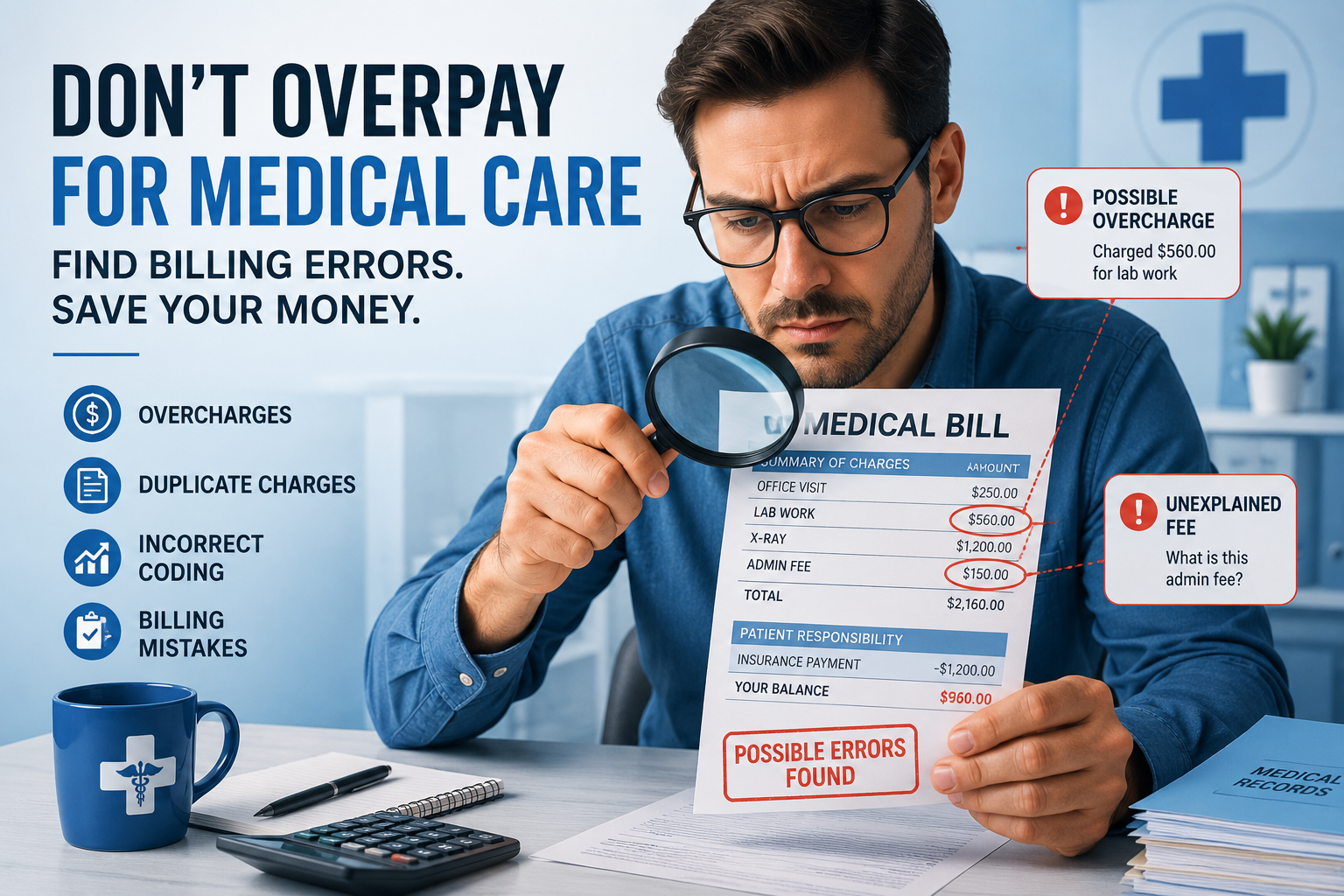
Look for the same service or item billed more than once. Common duplicate charges include daily room fees, medication administration fees, and routine supply charges. If you see the same CPT code appearing multiple times for a service that should only occur once, that is a potential error worth disputing.
Step 4 — Check for Services You Did Not Receive
Compare each line item against your own memory of your visit and any notes you took. If you see charges for a consultation with a specialist you never met, a procedure you do not recall having, or medications you were not given — flag these immediately. Ask your doctor for your medical records and compare them against the bill.
Step 5 — Check for Upcoding
Upcoding means billing for a more expensive service than was actually provided. For example, billing for a comprehensive office visit when you had a brief consultation, or billing for a complex procedure when a simpler one was performed. This is one of the most common billing errors and one of the hardest to spot without comparing your bill against your medical records.
Step 6 — Verify Insurance Processing
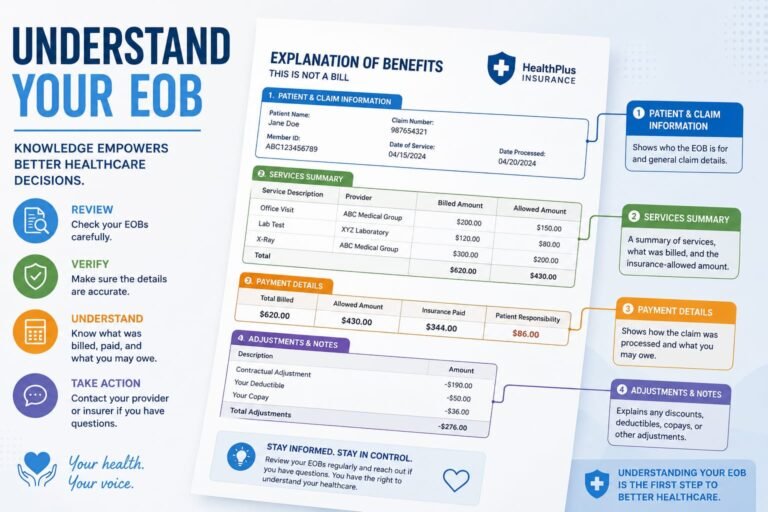
Request an Explanation of Benefits from your insurance company and compare it to your hospital bill. The amounts should align. If the hospital is billing you for amounts your insurance already paid, or if your insurance processed a claim incorrectly, the EOB comparison will reveal this.
How to Dispute Errors You Find
When you find a potential error, call the hospital billing department and ask for an explanation of the charge. Be specific — reference the exact line item, date, and CPT code. Ask them to verify the charge against your medical records. If they confirm an error, ask for a corrected bill in writing. If they dispute your finding, ask to speak with a billing supervisor and consider filing a formal dispute in writing.
Conclusion
Reading your medical bill carefully is one of the most financially valuable things you can do after any medical encounter. Request the itemized bill, check personal information, look for duplicates and services not received, compare against your EOB, and dispute anything that does not look right. The time invested in reviewing your medical bill can save hundreds or thousands of dollars.