Surprise Medical Bills — Your Rights Under the No Surprises Act 2026
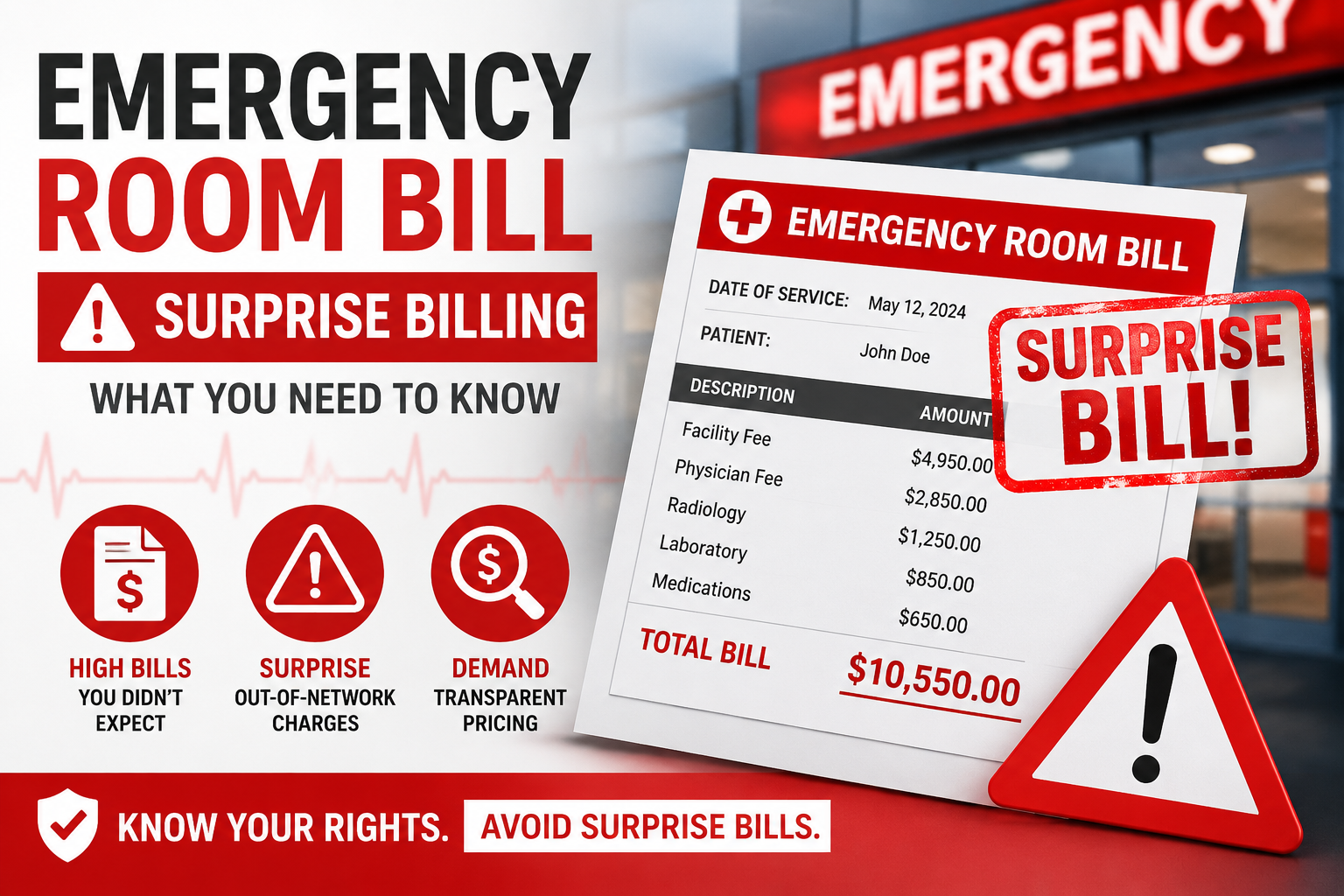
You went to an in-network hospital. You checked that your doctor was in network. You did everything right. And then a bill arrived from a provider you never chose — an anaesthesiologist, an assistant surgeon, an emergency physician — who was out of network and is now charging you thousands of dollars you were never warned about.
This is a surprise medical bill. And until recently, patients had almost no protection against them.
That changed on January 1, 2022, when the No Surprises Act took effect. This landmark federal law gives patients significant new protections against unexpected out-of-network charges — and millions of Americans are still unaware that these rights exist.
This complete guide explains exactly what the No Surprises Act covers, what it does not cover, how to recognise a surprise bill that violates the law and the exact steps to dispute it and get your money back.
What Is a Surprise Medical Bill?
A surprise medical bill is an unexpected bill from a healthcare provider you did not knowingly choose — typically an out-of-network provider who was involved in your care at an in-network facility without your knowledge or consent.
The most common surprise billing situations include:
Emergency care: You go to the nearest emergency room in a crisis. The ER facility may be in network — but the emergency physician, radiologist or specialist who treats you may be out of network and bill separately at much higher rates.
Non-emergency care at in-network facilities: You schedule a procedure at an in-network hospital. Your surgeon is in network. But the anaesthesiologist, assistant surgeon or another specialist involved in your care is out of network — and bills you separately at out-of-network rates you were never warned about.
Air ambulance services: You require an emergency air transport. The air ambulance company may not be in your insurance network — and air ambulance bills can reach tens of thousands of dollars.
What Was the Problem Before the No Surprises Act?
Before January 2022, patients in many states had little protection against surprise billing. A patient could receive a surprise bill for $10,000, $30,000 or more from an out-of-network provider they never chose — with no legal recourse.
The financial impact was devastating. According to research published in the Journal of the American Medical Association, surprise bills for emergency care averaged $628 per visit — but the top 1% of surprise bills averaged $19,000 or more.
The No Surprises Act — What Changed in January 2022
The No Surprises Act is federal legislation that took effect on January 1, 2022. It established nationwide protections against surprise billing for patients with private health insurance — including employer-sponsored plans, marketplace plans and grandfathered plans.
The core protection: In situations covered by the law, patients can only be charged their in-network cost-sharing amount — their standard deductible, copay and coinsurance — regardless of whether the provider is in or out of network.
This means: if you go to an in-network emergency room and an out-of-network emergency physician treats you, you pay only what you would have paid for an in-network physician. The provider cannot charge you the difference — this is called balance billing, and it is now prohibited in situations covered by the law.
What the No Surprises Act Covers
The No Surprises Act provides protection in three main situations:
Protection 1 — Emergency Care
For emergency services, the No Surprises Act protects you regardless of:
- Whether the emergency facility is in or out of network
- Whether the treating providers are in or out of network
- Whether you gave prior consent to out-of-network treatment
In an emergency, you cannot be expected to check provider networks. The law recognises this — and prohibits balance billing for emergency care from any provider involved in your emergency treatment.
This protection applies to:
- Emergency room visits
- Emergency care received at urgent care centres that provide emergency services
- Stabilisation services following an emergency
Protection 2 — Non-Emergency Care at In-Network Facilities
For non-emergency care at in-network facilities, the No Surprises Act protects you from surprise bills from out-of-network providers when:
- The out-of-network provider is at an in-network facility
- You did not knowingly and voluntarily agree to receive care from an out-of-network provider
- No in-network provider with the relevant speciality was available at that facility
This commonly applies to:
- Anaesthesiologists at in-network hospitals
- Assistant surgeons at in-network hospitals
- Radiologists reading your scans at an in-network facility
- Laboratory services performed at in-network facilities
- Hospitalists and intensivists at in-network hospitals
Protection 3 — Air Ambulance Services
The No Surprises Act extends protections to air ambulance services from non-hospital providers. If you require emergency air transport, you can only be charged your in-network cost-sharing amount — regardless of whether the air ambulance company is in your network.
What the No Surprises Act Does NOT Cover
Understanding the limits of the law is equally important:
Ground ambulance services: Ground ambulance services are NOT covered by the No Surprises Act. Surprise billing from ground ambulance companies remains a significant issue and is addressed separately under ongoing regulatory action.
Planned out-of-network care with notice: If you knowingly and voluntarily choose to see an out-of-network provider — and you sign a notice acknowledging this and your likely out-of-pocket costs — the No Surprises Act does not apply. You are responsible for the out-of-network costs you agreed to.
Uninsured patients: The No Surprises Act applies to patients with health insurance. Uninsured patients have separate protections — including requirements that providers give uninsured patients a good faith cost estimate before scheduled services.
Government insurance: Medicare and Medicaid have their own separate billing protection rules — they are not covered by the No Surprises Act.
Short-term health plans: Some short-term health insurance plans that do not meet ACA requirements may not be covered.
The Consent Exception — How Providers Try to Get Around the Law
The No Surprises Act includes an important exception: if a patient knowingly and voluntarily consents in writing to receive care from an out-of-network provider, balance billing may be permitted.
However, the law has strict requirements for this consent to be valid:
- The patient must receive a written notice at least 72 hours before the service (or, for services scheduled less than 72 hours in advance, on the day of scheduling)
- The notice must clearly identify the out-of-network provider
- The notice must include a good faith estimate of the likely out-of-pocket costs
- The patient must sign the notice voluntarily — not under duress
A hospital admissions form that you signed while in pain, without time to read, without being specifically told about an out-of-network provider, does NOT constitute valid consent under the No Surprises Act. You can challenge this.
Your Good Faith Estimate Rights
The No Surprises Act also requires providers to give uninsured or self-pay patients a good faith estimate of expected costs before scheduled services — at least 3 business days before the appointment.
If your actual bill exceeds your good faith estimate by more than $400, you have the right to initiate a patient-provider dispute resolution process to challenge the bill.
How to Recognise a Surprise Bill That Violates the Law
Before disputing a bill, determine whether it actually violates the No Surprises Act.
Ask yourself these questions:
- Do I have private health insurance (not Medicare or Medicaid)?
- Was the care provided at an in-network facility OR was it emergency care?
- Was the provider who sent the surprise bill out of network?
- Did I sign a valid advance consent form specifically for this out-of-network provider?
If your answers are yes, yes, yes, and no — your surprise bill likely violates the No Surprises Act and you have strong grounds to dispute it.
How to Dispute a Surprise Medical Bill — Step by Step
Step 1 — Do Not Pay the Surprise Bill Yet
Do not pay any surprise bill before determining whether it violates the No Surprises Act. Paying a bill, even under protest, can complicate your dispute.
Step 2 — Gather Your Documentation
Collect:
- The surprise bill — with the provider name, date of service and amount
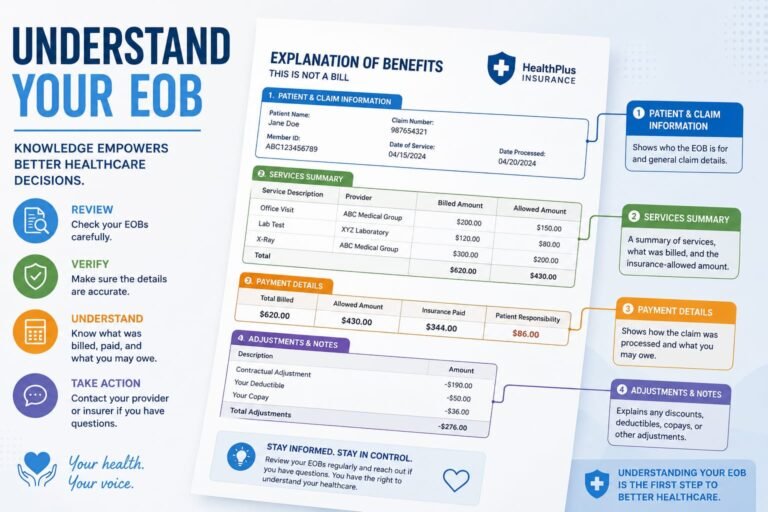
- Your Explanation of Benefits (EOB) from your insurance company
- Your insurance card — confirming your plan and network information
- Any paperwork you signed before the service — to check whether valid consent was obtained
- Records confirming the facility where you received care was in network
Step 3 — Contact Your Insurance Company
Call the member services number on your insurance card and say:
“I received a bill from [provider name] for [amount] for services on [date] at [facility name]. This provider appears to be out of network. I believe this bill may violate the No Surprises Act because I received [emergency care / non-emergency care at an in-network facility] and I did not provide valid consent to receive out-of-network care. Can you please review this claim and confirm how my No Surprises Act protections apply?”
Your insurance company has obligations under the No Surprises Act to apply in-network cost-sharing in covered situations. They should reprocess the claim correctly — you should only owe your in-network cost-sharing amount.
Step 4 — Contact the Provider Directly
Contact the billing department of the provider who sent the surprise bill:
“Hello, I am calling about account number [X]. I received a bill for [amount] for services on [date]. I believe this bill violates the No Surprises Act because [explain your situation — emergency care or in-network facility]. Under the No Surprises Act I can only be charged my in-network cost-sharing amount. I am requesting that this bill be corrected to reflect my in-network cost-sharing only.”
Many providers will correct the bill at this stage once they know you are aware of your rights.
Step 5 — File a Complaint With the No Surprises Help Desk
If the provider or insurance company does not resolve the issue, file a formal complaint:
No Surprises Help Desk: 1-800-985-3059
Online complaint portal: cms.gov/nosurprises
The No Surprises Help Desk is operated by the Centers for Medicare and Medicaid Services (CMS). They investigate complaints and can compel providers and insurers to comply with the law.
Step 6 — Contact Your State Insurance Commissioner
File a complaint with your State Insurance Commissioner simultaneously. Many states have their own surprise billing laws that may provide additional protections beyond the federal law. Your state insurance commissioner can investigate violations of both state and federal law.
Step 7 — File a Patient-Provider Dispute Resolution Claim
If you are an uninsured or self-pay patient and your bill exceeds your good faith estimate by more than $400, you can initiate the federal patient-provider dispute resolution process at:
cms.gov/medical-billing/patient-provider-dispute-resolution
An independent dispute resolution entity reviews the dispute and issues a binding decision.
Scripts for Disputing a Surprise Bill
When calling your insurance company:
“I received a balance bill from [provider] for [amount]. I believe this is a surprise bill covered by the No Surprises Act. The care was provided at [facility] which is in my network, and I did not knowingly consent to receiving out-of-network care from this provider. Please reprocess this claim applying my in-network cost-sharing only.”
When calling the billing provider:
“I am calling regarding account [X]. This bill appears to be a surprise bill prohibited by the No Surprises Act. I received care at an in-network facility and did not provide valid advance consent to receive out-of-network care from your provider. I am requesting you resubmit this claim to my insurance company applying the No Surprises Act protections.”
When filing a complaint:
“I received a surprise medical bill from [provider name], NPI [if available], for [amount] for services on [date] at [facility]. I am insured by [insurance company]. The facility was in my network. I did not provide valid advance consent to receive out-of-network care. The provider has refused to correct the bill despite my request.”
Real Case Study — How One Patient Eliminated a $9,400 Surprise Bill
When Marcus T. from Georgia required emergency appendix surgery, he was taken to the nearest hospital — which was in his insurance network. His surgeon and the hospital were both in network.
Three weeks later, Marcus received a $9,400 bill from the anaesthesiology group that had administered his anaesthesia during surgery. The group was not in his insurance network — and they were billing him directly for the balance after receiving the in-network rate from his insurer.
Marcus had never chosen this anaesthesiology group. He had no idea they were out of network. He had not signed any consent form specifically acknowledging out-of-network anaesthesia services.
Step 1 — Marcus called his insurance company
He explained the situation and referenced the No Surprises Act. His insurance company confirmed that the anaesthesiology services during his emergency surgery were covered by the law — and that he could only be charged his in-network cost-sharing amount, which was $350 (his remaining deductible).
Step 2 — Marcus contacted the anaesthesiology billing department
He called and clearly stated that the bill violated the No Surprises Act and that he could only be charged $350 in-network cost-sharing. The billing department disputed this and insisted the full amount was owed.
Step 3 — Marcus filed a complaint with the No Surprises Help Desk
He called 1-800-985-3059 and filed a formal complaint, providing his insurance information, the bill details and a summary of his communications with both the insurer and the provider.
Step 4 — CMS investigated and the provider was compelled to comply
Within 60 days, CMS confirmed that the bill violated the No Surprises Act and notified the anaesthesiology group of their obligation to comply. The group corrected the bill — Marcus paid $350 instead of $9,400.
Total saved through knowing and enforcing his rights: $9,050.
“I almost just paid the $9,400 because I did not know I had any recourse,” Marcus said. “The No Surprises Act complaint process was straightforward — one phone call and one online form.”
Air Ambulance Surprise Bills — A Special Case
Air ambulance surprise bills deserve special attention because the amounts involved are often enormous — sometimes $30,000 to $100,000 or more — and the situations are inherently emergency in nature.
Under the No Surprises Act:
- Air ambulance services from non-hospital providers are covered
- You can only be billed your in-network cost-sharing amount for covered air ambulance services
- Air ambulance companies cannot balance bill you for the difference between their charges and your insurance payment
If you receive a surprise air ambulance bill:
- Contact your insurance company — confirm how the No Surprises Act applies to your specific situation
- Contact the air ambulance company — reference the No Surprises Act and your in-network cost-sharing rights
- File a complaint with the No Surprises Help Desk — 1-800-985-3059
- Contact your state insurance commissioner — some states have additional air ambulance billing protections
Important: Ground ambulance services are NOT covered by the No Surprises Act. For ground ambulance surprise bills, your state may have its own laws — contact your state insurance commissioner.
Protecting Yourself From Surprise Bills Before They Happen
While the No Surprises Act provides powerful protection after the fact, you can also take steps before receiving care to reduce the risk of surprise bills:
Before any scheduled procedure at a hospital:
- Confirm the facility is in your network — call your insurer or check their online directory
- Confirm your surgeon is in network — verify directly with your insurer
- Ask the hospital: “Are all providers who will be involved in my care — including anaesthesiologists, assistant surgeons and radiologists — in my insurance network?”
- If any provider will be out of network, ask to see the advance consent form and review it carefully before signing
After receiving any out-of-network bill:
- Check whether your situation is covered by the No Surprises Act
- Contact your insurer before paying
- Do not sign any retroactive consent forms under pressure
- File a complaint promptly if the provider insists on balance billing
Hospital Price Transparency Rule
Related to the No Surprises Act, the Hospital Price Transparency Rule (effective January 2021 and strengthened in 2023) requires all hospitals to post their standard charges online — including negotiated rates with insurers.
This tool can help you understand what your in-network hospital charges for specific procedures before receiving care — giving you information to ask better questions and identify potential billing issues.
Access hospital price transparency data at: cms.gov/hospital-price-transparency
Frequently Asked Questions
Does the No Surprises Act apply to Medicare and Medicaid patients?
No — the No Surprises Act applies to patients with private health insurance. Medicare and Medicaid have their own separate billing protection rules. Medicare patients are protected from balance billing by participating providers under Medicare assignment rules. If you have Medicare and believe you have been improperly balance-billed, contact Medicare at 1-800-MEDICARE.
What if the provider says I signed a consent form allowing out-of-network billing?
A valid consent form under the No Surprises Act requires: written notice at least 72 hours in advance, specific identification of the out-of-network provider, a good faith estimate of likely out-of-pocket costs and your voluntary signature. A general hospital admissions form you signed on arrival — without specific disclosure of an out-of-network provider and expected costs — does not constitute valid consent. Challenge any surprise bill even if you signed something at admission.
How long do I have to file a complaint about a surprise bill?
File your complaint as soon as possible after receiving the surprise bill. There is no specific federal deadline stated for No Surprises Act complaints — but acting promptly creates a clearer record and prevents the bill from going to collections while the complaint is being investigated.
Can the provider send my surprise bill to collections while I am disputing it?
If you have filed a complaint with CMS and the matter is under investigation, inform the provider of this and request that collection activity be suspended pending resolution. Providers who aggressively pursue collection on bills that violate the No Surprises Act may face additional regulatory action. Keep documentation of all communications.
What if I am uninsured and receive a surprise bill?
Uninsured patients are protected by the Good Faith Estimate requirement of the No Surprises Act. For scheduled services, providers must give you a written good faith estimate of expected costs. If your actual bill exceeds the estimate by more than $400, you can use the patient-provider dispute resolution process at cms.gov to challenge it.
Does the No Surprises Act cover dental and vision care?
Generally no — the No Surprises Act primarily covers medical and mental health services. Dental and vision care have separate billing structures and are not typically covered by the law’s surprise billing protections.
What if the hospital says they are not subject to the No Surprises Act?
All hospitals that participate in Medicare and Medicaid — which is virtually every hospital in the United States — are subject to the No Surprises Act as a condition of participation. If a hospital claims the law does not apply to them, file a complaint immediately with CMS at cms.gov/nosurprises. This is a serious violation.
Your No Surprises Act Action Plan
If you received a surprise bill today:
- Do not pay it yet — determine first whether it violates the No Surprises Act
- Gather your EOB, insurance card and the surprise bill
- Call your insurance company — reference the No Surprises Act and request they reprocess the claim
- Call the billing provider — state clearly that the bill appears to violate the No Surprises Act
- File a complaint at cms.gov/nosurprises if the provider refuses to comply
- Call the No Surprises Help Desk: 1-800-985-3059
- File a complaint with your State Insurance Commissioner simultaneously
Before scheduled procedures:
- Always confirm the facility AND all individual providers are in network
- Ask hospitals specifically about anaesthesiologists, assistant surgeons and radiologists
- Review any consent forms carefully before signing — do not sign under pressure
Key contacts for surprise bill disputes:
- No Surprises Help Desk: 1-800-985-3059
- CMS Online Complaint Portal: cms.gov/nosurprises
- Your State Insurance Commissioner: naic.org/state_web_map.htm
- Medicare (for Medicare patients): 1-800-MEDICARE
Related guides:
- How to Dispute a Medical Bill With Your Insurance Company — Complete 2026 Guide
- How to Appeal a Health Insurance Denial — Step by Step Guide 2026
- Hospital Financial Assistance Programs — The Complete Guide for 2026
- Medical Billing Errors — How to Find and Fix Them
Medical and Financial Disclaimer: The information on FightMedicalBill.com is for educational purposes only and does not constitute medical, legal or financial advice. The No Surprises Act and related regulations are subject to ongoing rulemaking and court decisions. Always verify current information at cms.gov and consult a qualified healthcare attorney for complex situations.