How to Negotiate Medical Bills: Proven Tactics to Reduce Your Bill by 50% or More
How to Negotiate Medical Bills: Proven Tactics to Reduce Your Bill by 50% or More
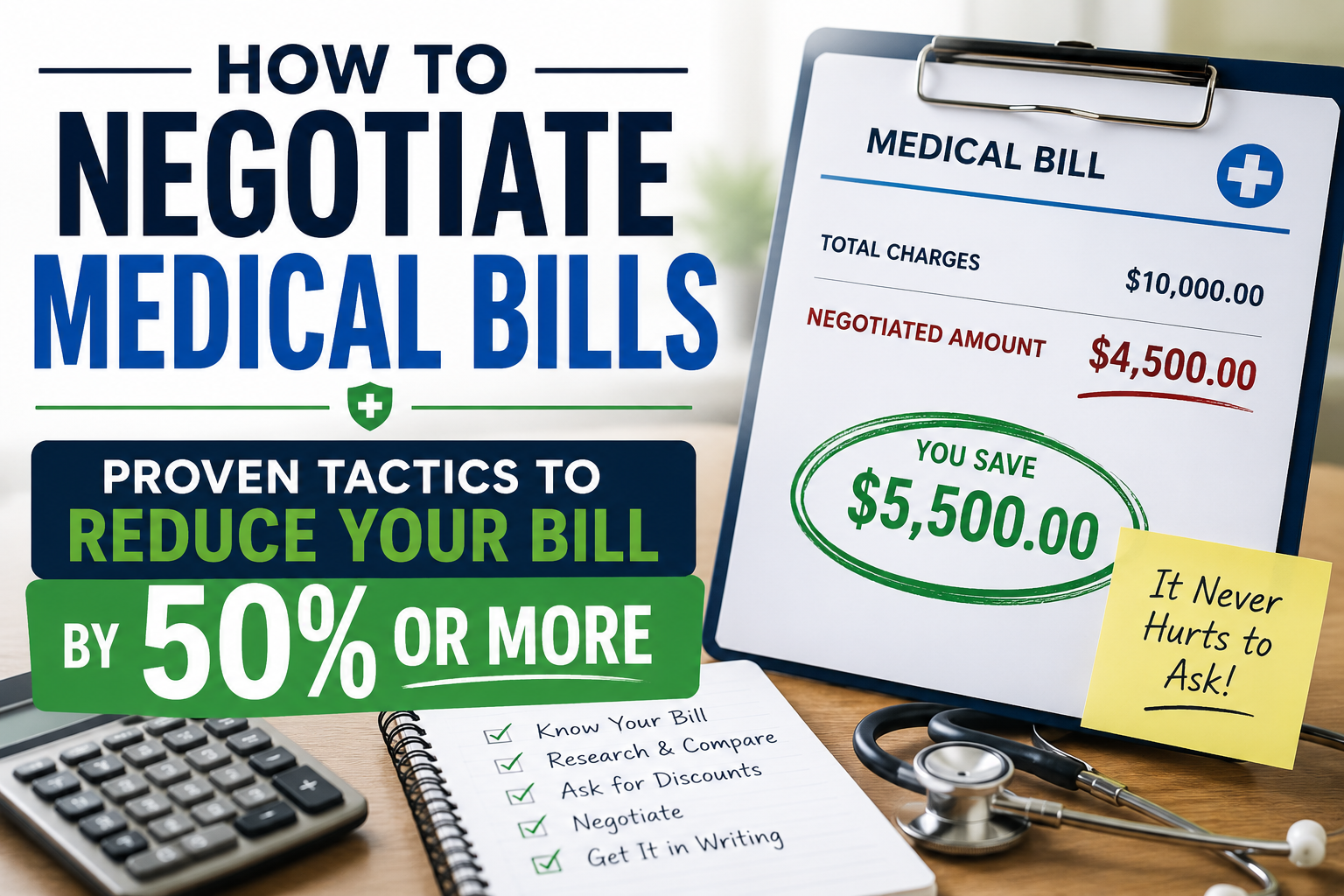
Medical bills are negotiable. This is one of the best-kept secrets in personal finance, and it can save you thousands of dollars. Hospitals and healthcare providers regularly accept significantly less than the billed amount — often 20%, 50%, or even 80% less — when patients know how to ask.
Whether you are facing a $500 urgent care bill or a $50,000 surgery bill, the tactics in this guide will give you the knowledge and confidence to negotiate your medical bills aggressively and legally. You have nothing to lose — healthcare providers would rather receive something than nothing — and potentially thousands of dollars to gain.
Why Medical Bills Are Negotiable
Healthcare pricing in the United States is notoriously opaque. The “chargemaster” price — the amount a hospital officially charges for a service — is often 3 to 10 times what insurance companies actually pay for the same service. Cash-pay patients (those without insurance) who pay the chargemaster price are paying far more than is necessary.
Hospitals operate with wide pricing flexibility for several reasons. They receive funding from the government, charitable sources, and grants specifically to provide care to patients who cannot pay. They write off uncompensated care as a tax deduction. They prefer receiving a negotiated lower payment over dealing with collection agencies and bad debt write-offs. This financial reality gives you significant leverage as a patient.
Step 1: Request an Itemized Bill
Before you negotiate anything, request a fully itemized bill — a line-by-line list of every charge. This is your legal right and is critical for several reasons.
Medical billing errors are staggeringly common. Studies consistently find that 80% of medical bills contain errors. Common errors include duplicate charges for the same service, charges for services never performed, upcoding (billing for a more expensive service than was provided), and bundling errors (charging separately for services that should be billed together at a lower rate).
Call the billing department and say: “I would like to request a fully itemized bill with CPT codes for all charges.” Once you receive it, compare it to your medical records or discharge paperwork. Question anything that does not look right. Even if you cannot identify specific errors, having the itemized bill is essential for all subsequent negotiation steps.
Step 2: Check for Billing Errors
Review your itemized bill carefully for these common errors:
Duplicate charges for the same item. Charges for services you did not receive. Incorrect number of days for inpatient stays. Operating room time billed in error. Implant or medical device charges for items not actually used. Charges for supplies like gloves, gowns, and basic supplies that should be included in room charges. Incorrect patient information that could affect insurance processing.
If you find errors, document them carefully and call the billing department to dispute. Follow up your phone call with a written letter or email creating a paper trail. Many errors are corrected without any further negotiation needed, immediately reducing your bill.
Step 3: Verify Your Insurance Processed Everything Correctly
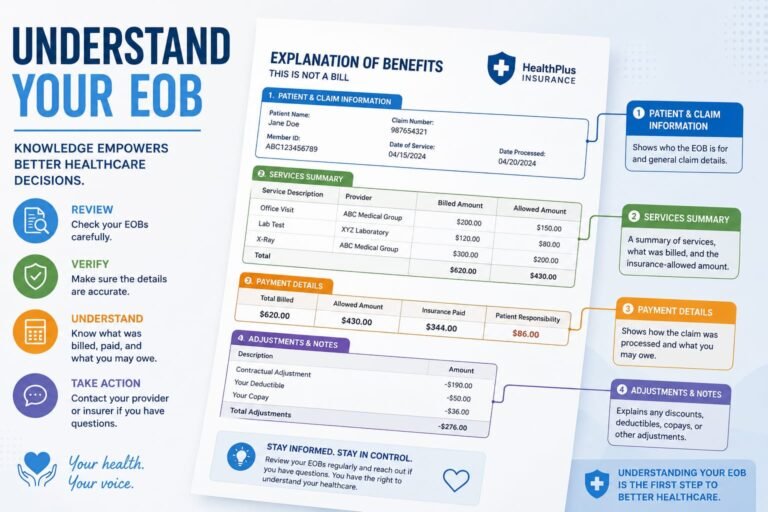
Before negotiating, make sure your insurance company paid their full share. Compare the Explanation of Benefits (EOB) from your insurer with the itemized bill. Check that all in-network services were billed as in-network. Verify your deductible was applied correctly. Confirm that all services your policy covers were included in the insurance payment.
If something was denied that should have been covered, file an appeal with your insurance company before negotiating with the provider. An insurance appeal that goes in your favor can reduce your bill far more than negotiating with the provider directly.
Step 4: Research the Fair Price
To negotiate effectively, you need to know what the service should actually cost. Three free resources help you research fair pricing:
FAIR Health Consumer (fairhealthconsumer.org): Free tool that shows the average cost of medical procedures in your area based on actual claims data. This is the most useful benchmark for negotiation.
Healthcare Bluebook (healthcarebluebook.com): Provides fair price estimates for medical services in your zip code.
Medicare reimbursement rates: Look up what Medicare pays for any procedure using the Medicare Physician Fee Schedule on the CMS website. Medicare rates are publicly available and often used as a baseline for negotiation. Many hospitals accept 110% to 150% of Medicare rates for self-pay patients.
If your bill is significantly above the fair price for your area, you have clear justification for negotiating a reduction.
Step 5: Ask About Financial Assistance Programs
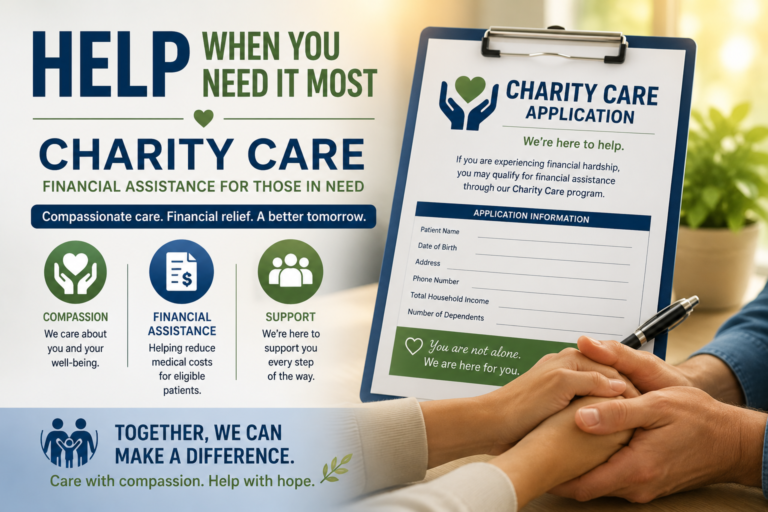
Before negotiating, always ask about financial assistance programs — also called charity care or sliding fee scales. Nonprofit hospitals receiving 501(c)(3) tax status are required by the Affordable Care Act to have financial assistance programs for patients who qualify based on income.
Many hospitals will reduce bills by 50% to 100% for patients with incomes up to 400% of the federal poverty level (FPL) — that is $60,240 for a single person or $124,800 for a family of four in 2026. Even patients with higher incomes may qualify for partial discounts.
Ask the billing department directly: “Does your hospital have a financial assistance or charity care program? How do I apply?” This is not welfare — it is a benefit these hospitals are legally required to offer and specifically funded to provide. Applying takes 30 to 60 minutes of paperwork and can eliminate thousands of dollars of debt.
Step 6: Negotiate a Cash Pay Discount
If you can pay the reduced amount in full, you have significant negotiating power. Hospitals prefer receiving a lump sum immediately over waiting months for installment payments or potentially receiving nothing.
Call the billing department and ask to speak with a supervisor or financial counselor. Say: “I am prepared to pay a lump sum to settle this account. I have done research on the typical reimbursement for these services and I would like to discuss settling this balance for [your target amount].”
A reasonable starting offer is 25% to 40% of the billed amount for uninsured patients, or the Medicare rate (often 30% to 50% of charges) for any patient. For large bills over $5,000, starting even lower is reasonable. Expect some back-and-forth — this is a negotiation, not a one-sided request.
Always get any agreed settlement amount in writing before sending payment. State clearly in your letter that this payment constitutes full and final settlement of the account.
Step 7: Negotiate a Payment Plan Without Interest
If you cannot pay a lump sum, most hospitals offer interest-free payment plans. This is often far better than putting the bill on a credit card, which charges 20% or more in interest.
Ask: “Can I set up a payment plan? Is there any interest on the plan?” If they offer a plan with interest, negotiate to remove it — hospitals are rarely required to charge interest on payment plans and many will waive it if asked.
Under the No Surprises Act (effective 2022), most providers must offer interest-free extended payment plans to patients who qualify for financial assistance. Even if you do not qualify for a full discount, you likely qualify for an interest-free plan.
Step 8: Consider a Medical Bill Advocate
If your bill is large and complex, consider hiring a medical bill advocate — a professional who reviews and negotiates medical bills on your behalf. Advocates typically charge 20% to 35% of the amount they save you, meaning there is no upfront cost and they only get paid if they succeed in reducing your bill.
Medical bill advocates have deep knowledge of billing codes, hospital financial assistance programs, and negotiation strategies. For bills over $10,000, they often save far more than their fee. Find advocates through the Alliance of Claims Assistance Professionals (claims.org) or the National Association of Healthcare Advocacy (nahac.com).
Step 9: Know Your Surprise Billing Protections
The No Surprises Act protects patients from unexpected out-of-network bills in several situations: emergency care at any facility, care from out-of-network providers at in-network facilities when you did not have the ability to choose, and air ambulance services. If you received a surprise out-of-network bill for covered services, file a complaint with your state insurance commissioner or the federal government at cms.gov. These bills are often eliminable entirely.
What to Say When Negotiating
Use these specific phrases when negotiating medical bills: “I would like to resolve this account and I am prepared to pay [amount] as full and final settlement.” “What is your self-pay discount rate?” “Does your hospital have a financial assistance program I may qualify for?” “I understand the Medicare reimbursement rate for this service is approximately [amount]. I would like to resolve this at that level.” “Can you note my account that I dispute these charges as inaccurate and I am requesting an itemized review?”
Never Ignore Medical Bills
Ignoring medical bills is the worst approach. Unpaid medical bills can be sent to collections, appear on your credit report (though new rules significantly limit this), and result in lawsuits and wage garnishment. However, medical debt collectors have very limited leverage compared to credit card or loan debt — negotiate and settle before it escalates. Always respond to every bill, even if just to ask for itemization and inquire about financial assistance.
Start Negotiating Today
You have the legal right to negotiate your medical bills, and providers negotiate every day. The worst they can say is no, and even a partial reduction can save you hundreds or thousands of dollars. Start with the itemized bill, check for errors, ask about financial assistance, and make your offer. Your financial wellbeing is worth a phone call.