How to Lower Prescription Drug Costs: 9 Strategies That Save Real Money in 2026
Prescription drug costs represent one of the most significant and fastest-growing components of American healthcare spending. In 2026, the average American adult takes 4 prescription medications, and brand-name drug prices have increased an average of 40% over the past decade. But the full retail price of a prescription is rarely what informed patients actually pay. Nine specific strategies can dramatically reduce your prescription drug costs — some immediately, some over time.
Strategy 1: Ask for Generic Alternatives
Generic drugs contain the same active ingredients as brand-name drugs, meet the same FDA safety and efficacy standards, and typically cost 80–85% less. Many brand-name prescriptions have generic equivalents — but doctors don’t always prescribe them by default, and pharmacists don’t always suggest the switch without being asked. Simply asking: “Is there a generic version of this medication?” can save hundreds of dollars per year. If your doctor insists on the brand name for clinical reasons, ask them to document this for your insurer — it can support prior authorization for coverage of the brand-name drug.
Strategy 2: Use Prescription Discount Cards (GoodRx and Alternatives)
Prescription discount cards are free to use and often reduce drug costs dramatically below insurance copays. How they work: discount card networks negotiate lower prices with pharmacies and pass the savings to cardholders. You present the card at checkout instead of using insurance — and sometimes get a lower price than your insurance would provide.
- GoodRx: Free, available at 70,000+ pharmacies. Average savings 80% off retail price. Free Gold membership ($9.99/month) provides additional discounts.
- RxSaver by RetailMeNot: Free, often comparable to GoodRx with slightly different pharmacy pricing.
- Blink Health: Free, sometimes beats GoodRx on specific medications. Pay online, pick up at pharmacy.
- Cost Plus Drugs (costplusdrugs.com): Mark Cuban’s pharmacy — transparent pricing at cost plus 15% markup plus dispensing fee. Particularly excellent for generics and some specialty medications.
Compare prices across all platforms for each medication — prices vary by pharmacy and platform.
Strategy 3: Manufacturer Patient Assistance Programs
Every major pharmaceutical manufacturer has a patient assistance program (PAP) providing free or heavily discounted brand-name medications to qualifying patients. Income requirements vary but many programs extend to households earning up to 300–400% of the federal poverty level. Find programs through:
- NeedyMeds.org — comprehensive PAP database searchable by medication
- RxAssist.org — similar database with application assistance
- The specific manufacturer’s website — search “[drug name] patient assistance program”
PAP applications require physician involvement and documentation of financial need. Applications can take 2–4 weeks to process. Apply proactively — before you run out of medication.
Strategy 4: Request a 90-Day Supply
Most insurance plans and pharmacy discount programs offer lower per-unit cost for 90-day supplies compared to 30-day supplies. For stable, long-term medications (blood pressure, cholesterol, thyroid), a 90-day mail-order or retail prescription typically costs 10–25% less per pill than monthly fills. Check your insurer’s mail-order pharmacy option — these are often significantly cheaper than retail pharmacies for maintenance medications.
Strategy 5: Check Multiple Pharmacies
Prescription prices vary significantly between pharmacies for the same medication. In one 2024 consumer study, the same generic medication cost $4 at one pharmacy and $79 at another — a 2,000% price difference for the identical drug. Always compare prices at: your current pharmacy, Costco pharmacy (consistently lowest-priced in many markets, membership not required for pharmacy), Walmart $4/$10 prescription program, Target/CVS and Walgreens generic programs, and online pharmacies (Blink, Cost Plus Drugs).
Strategy 6: Split Higher-Dose Pills
Many medications are priced similarly regardless of dose — a 20mg pill may cost only marginally more than a 10mg pill. With your doctor’s approval, you can often get a 60-day supply of double-dose pills and use a pill splitter to create a 120-day supply at half the cost. This works for many common medications (certain statins, blood pressure medications, antidepressants) but NOT for extended-release or enteric-coated formulations that cannot be split. Always confirm with your physician first.
Strategy 7: Medicare Extra Help (Low Income Subsidy)
Medicare beneficiaries with limited income and resources may qualify for the Extra Help program (also called Low Income Subsidy or LIS), which dramatically reduces Medicare Part D prescription costs. In 2026, full Extra Help can reduce monthly Part D premiums to $0 and reduce per-prescription copays to $4.50 (generics) and $11.20 (brand-name). Apply at ssa.gov or your local Social Security office. Many eligible beneficiaries don’t know to apply.
Strategy 8: State Pharmaceutical Assistance Programs
Many states have additional pharmaceutical assistance programs for state residents who don’t qualify for Medicaid but still face high drug costs. Programs vary widely by state. Examples:
- New York’s EPIC program for seniors
- New Jersey’s PAAD program
- California’s ADAP for HIV/AIDS medications
- Many states have standalone insulin assistance programs
Search “[your state] prescription assistance program” for current state offerings.
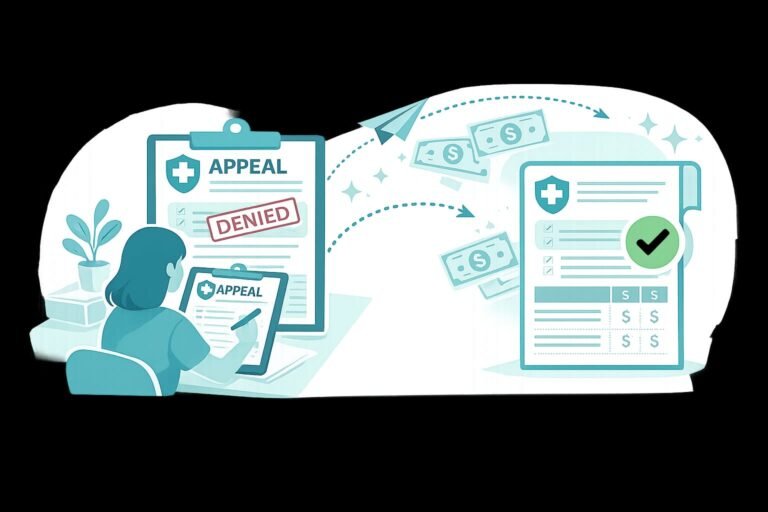
Strategy 9: Appeal Prior Authorization Denials
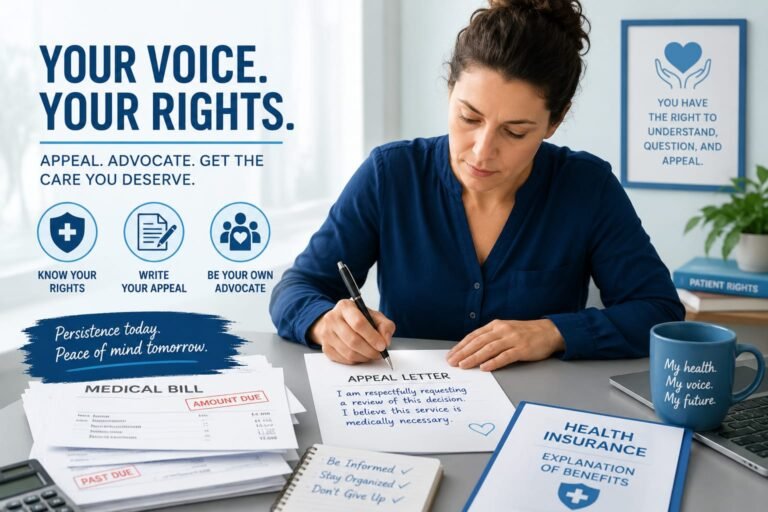
If your insurance denies coverage for a medication citing “prior authorization required” or “step therapy,” work with your doctor to appeal. The appeal should include: clinical documentation of why the prescribed medication is medically necessary, documentation of any step therapy drugs you’ve already tried and failed or are contraindicated for you, and peer-reviewed clinical support for the prescribed medication. Prior authorization appeals for medications are successful approximately 50–60% of the time when properly supported by physician documentation.
Frequently Asked Questions
Can I use GoodRx and Medicare together?
You cannot use GoodRx as a supplement to Medicare Part D for covered medications — it’s one or the other for any given prescription. However, you can use GoodRx for medications not covered by your Part D plan. For some medications, GoodRx prices may be lower than your Part D copay — compare before filling each prescription.
Are online pharmacy prices legitimate?
Legitimate US online pharmacies are verified by the National Association of Boards of Pharmacy’s VIPPS program (nabp.pharmacy/programs/vipps). Cost Plus Drugs and Blink Health are legitimate options. Avoid pharmacies not based in the US or not verifiable through NABP — counterfeit medications are a serious risk from unverified international sources.
What if I can’t afford insulin?
For Medicare beneficiaries, insulin is capped at $35/month under the Inflation Reduction Act. For non-Medicare patients, all three major insulin manufacturers (Eli Lilly, Novo Nordisk, Sanofi) have capped insulin prices at $35/month or lower for uninsured patients. GoodRx prices for many insulin products have also decreased significantly. Apply for manufacturer assistance programs if still too expensive.
Conclusion
The difference between what Americans pay full price for prescriptions and what informed patients pay using these strategies can be staggering — often 70–90% less for the same medications. The system is complex and opaque by design, but each of these nine strategies has been used successfully by millions of patients. Start with the strategies that require the least effort — generic substitution, discount cards, mail-order 90-day supplies — and add more as your situation warrants. Your prescription costs are more negotiable than you think.